We earn commissions from links on our site, enabling us to deliver independent reviews. See our editorial policy.
Quick take
The Vmax VX2 Hub is an incredibly capable commuter that gets my full recommendation. It goes further and faster than the competition and feels incredibly well-engineered and heavy-duty throughout.
What I like
- Incredibly strong motor performance
- 35.6-mile real-world range
- Strong IPX6 weather resistance
- Very comfortable dual suspension
- Heavy-duty build - built to last
- Doesn't force you to use an app
What I don't like
- No acceleration customization
- On the heavy side (57.1 lbs)
- App is basic at best (if you care about it)
Where to buy
 Vmax VX2 Hub (18.2Ah)

Tested performance
- Top speed
- 33.5 mph
- Range
- Range priority
- 40.1 mi
- Regular
- 35.6 mi
- Speed priority
- 29.9 mi
- Acceleration
- 0–15 mph
- 2.87 sec
- 0–20 mph
- 4.76 sec
- 0–25 mph
- 6.98 sec
- 0–30 mph
- 11.4 sec
- Hill climb
- 17 mph avg
- Braking
- 11.4 ft
The Vmax VX2 Pro was a range champion. When I tested it last year, its 39.6-mile range demolished the competition while maintaining solid 48V performance. But it lacked one thing: suspension.
The VX2 Hub addresses this directly. Vmax took everything that made the Pro special and added full suspension, a stronger 1900W peak motor, an even larger battery, and a proper display. On paper, it looks like the complete high-end commuter they were building toward.
But it’s also more expensive than the Pro, which puts it in a different competitive bracket. So, is it worth it? I put it to the test across 200 miles and used it as a daily commuter for several weeks. I also benchmarked its performance: speed, acceleration, range, hill climbing, and much more.
Speed & Motor Performance
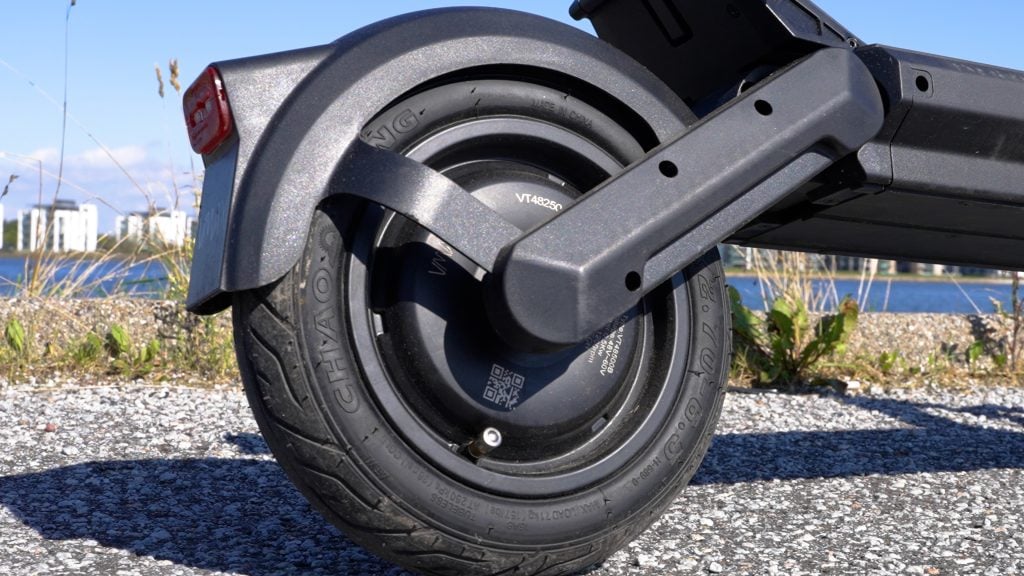
The VX2 Hub packs a 500W motor (1900W peak). That peak power number makes a huge difference, and it shows in every performance test. It’s an absolute powerhouse.
Top Speed Test
I clocked the VX2 Hub at 33.5 MPH in my tests. For context, here’s how it stacks up:
| Model | Top Speed | Motor (Peak) |
|---|---|---|
| Vmax VX2 Hub | 33.5 MPH | 500W (1900W) |
| Segway Ninebot Max G3 | 28.0 MPH | 850W (2000W) |
| Vmax VX2 Pro | 23.9 MPH | 500W (1300W) |
| NIU KQi 300X | 23.6 MPH | 500W (1000W) |
The VX2 Hub is nearly 10 MPH faster than its predecessor and leaves the NIU 300X in the dust. The new Max G3 is also way behind, despite its higher motor rating, which shows Vmax has definitely tweaked things right.
The 48V system maintains strong performance throughout the battery cycle too. I was still hitting 31 MPH at 30% charge.
Acceleration Test
I ran 10 acceleration runs on all models and calculated the average.
| Model | 0-15 MPH | 0-20 MPH | 0-25 MPH | 0-30 MPH |
|---|---|---|---|---|
| Vmax VX2 Hub | 2.87 s | 4.76 s | 6.98 s | 11.4 s |
| Segway Ninebot Max G3 | 3.54 s | 6.48 s | 8.12 s | – |
| NIU KQi 300X | 3.84 s | 8.32 s | – | – |
| Vmax VX2 Pro GT | 3.83 s | 8.23 s | – | – |
The VX2 Hub hits 20 MPH in 4.76 seconds. That’s 1.7 seconds faster than the Max G3 and 3.5 seconds faster than the 300X.
The torque is strong and instant. The only downside is that you can’t customize the acceleration other than using speed mode 1 or 2. It’d be nice to tune it to a midground – hopefully Vmax adds support for that via a firmware update in the future.
Hill Climbing Test
The VX2 Hub absolutely smashed all hills in testing. My standard 250 ft test hill at 8% grade took just 10 seconds to climb.
| Model | Time | Avg Speed |
|---|---|---|
| Vmax VX2 Hub | 10.0 s | 17.0 MPH |
| Segway Ninebot Max G3 | 10.5 s | 16.2 MPH |
| Vmax VX2 Pro GT | 11.0 s | 15.5 MPH |
| NIU KQi 300X | 11.1 s | 15.4 MPH |
On my steepest 17% grade test, the VX2 Hub averaged 15.2 MPH. That’s better than dual-motor options like the Apollo Go and Inmotion Climber.
The torque is nothing short of beastly. Even at 250+ pounds, you won’t struggle on inclines. This scooter simply has the performance overhead to push through the most challenging terrain.
We test every ride
Independent reviews, buying advice and the real test data behind them. Straight to your inbox.
Join 2,000+ riders


Range & Battery Performance
The VX2 Hub comes in 13Ah (642Wh) and 18.2Ah (874Wh) versions. I tested the larger battery, but I’ve calculated estimates for the 13Ah version based on the same efficiency.
Range Tests
As always, I conducted three tests at varying speeds to understand the actual range the VX2 Hub delivers in the real world.
18.2Ah Battery (Tested)
| Test | Range | Avg Speed |
|---|---|---|
| Speed Priority | 29.9 miles | 26.7 MPH |
| Regular | 35.6 miles | 20.2 MPH |
| Range Priority | 40.1 miles | 15.0 MPH |
13Ah Battery (Calculated)
| Test | Range | Avg Speed |
|---|---|---|
| Speed Priority | 21.4 miles | 26.7 MPH |
| Regular | 25.4 miles | 20.2 MPH |
| Range Priority | 28.6 miles | 15.0 MPH |
Range Comparison
Here’s how the VX2 Hub stacks up against the competition based on my regular range tests.
| Model | Regular Range | Battery |
|---|---|---|
| Vmax VX2 Pro GT | 39.6 miles | 768Wh |
| Vmax VX2 Hub (18.2Ah) | 35.6 miles | 874Wh |
| NIU KQi 300X | 26.8 miles | 608Wh |
| Vmax VX2 Hub (13Ah) | 25.4 miles | 642Wh |
| Segway Ninebot Max G3 | 24.9 miles | 597Wh |
Interestingly, the VX2 Pro GT edges out the Hub despite having a smaller battery. That’s down to its lighter weight, lack of suspension, and less aggressive motor that draws less power. But the VX2 Hub 18.2Ah still delivers a solid range that beats both the Max G3 and 300X.
The Max G3’s 597Wh battery is honestly its biggest bottleneck. You get all that power and performance, but then you’re limited by the smaller battery. The VX2 Hub 18.2Ah effectively gives you 43% more range, which makes it a lot more interesting in my eyes.
Even the 13Ah version matches or beats the competition while delivering way more performance. For most commuters, 25 miles of real-world range is plenty, and you can always go for the larger battery version if needed.
A lot of these commuter scooters are somewhat limited on range. Manufacturers keep buffing motor performance without increasing battery capacity (the evolution of the Ninebot G30P > G2 > G3 is a perfect example), but that isn’t the case here – the VX2 Hub truly goes the distance.
Ride Quality
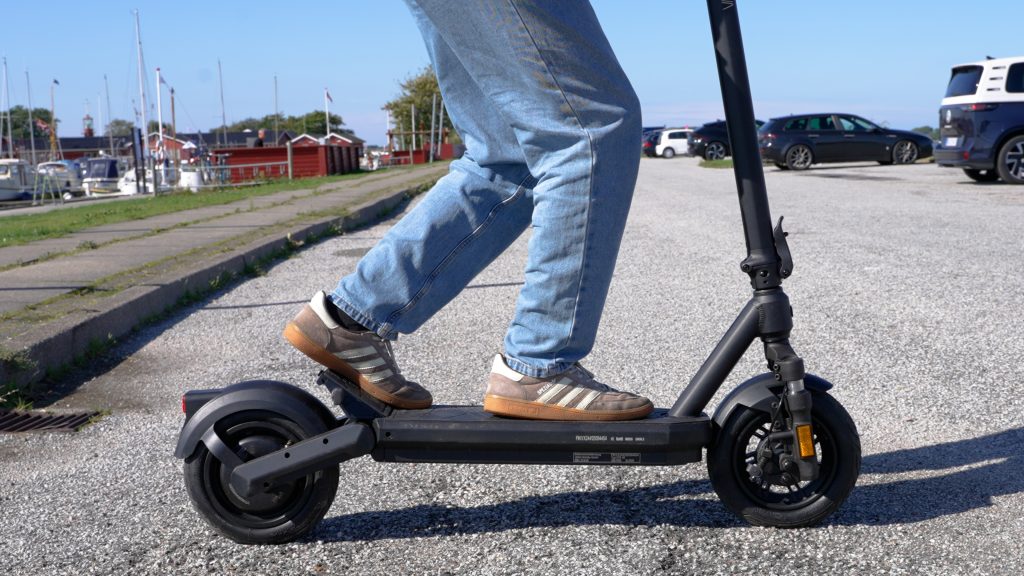
The VX2 Hub delivers exceptional comfort. The front hydraulic and rear rubber suspension creates a really smooth and plush ride that engages gradually without that initial resistance you get on cheaper forks.
Suspension & Tires
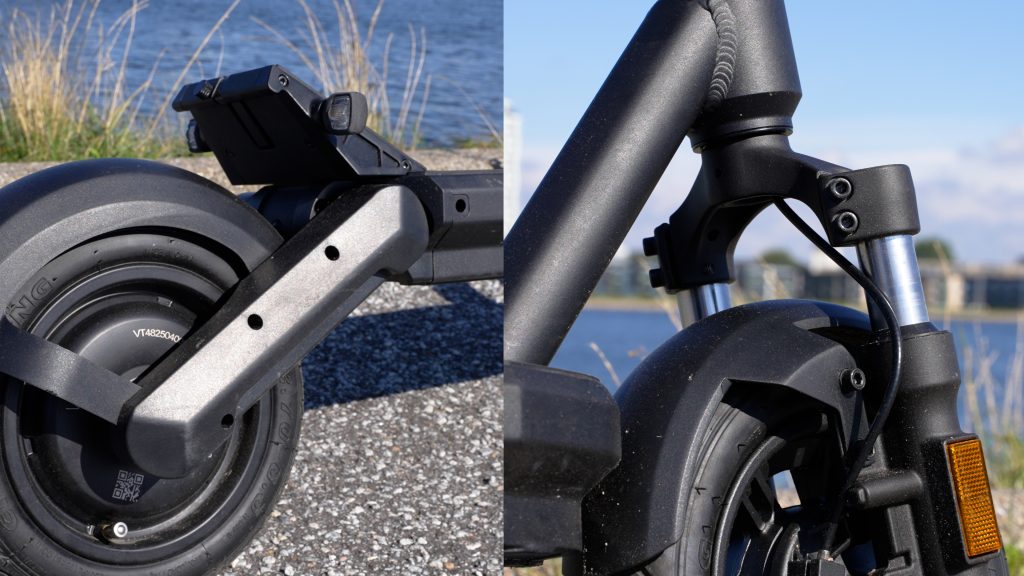
I’d rate the ride comfort at 90% of the Segway Ninebot Max G3’s dual hydraulic setup. It’s more comfortable than the NIU KQi 300X and Navee ST3 Pro, and pretty much on par with the Max G2. The suspension tuning works well across different rider weights and handles varying terrain nicely.
The 10″ tubeless tires are excellent. They stayed grippy even on wet surfaces and maintained pressure well throughout testing. My only wish is that they came pre-sealed with anti-puncture solution like some competitors, but that’s a 5-minute DIY job that costs 15 bucks.
The deck slants slightly toward the front, which seems counterintuitive since most weight shifts forward during acceleration and braking. I’d probably have designed it to rise instead, but honestly, I never felt it during rides – only noticed it when reviewing footage. Likely a non-issue in practice.
The scooter feels rock-solid stable at speed, too. No wobbles or sketchy moments, even pushing 30+ MPH.
Braking
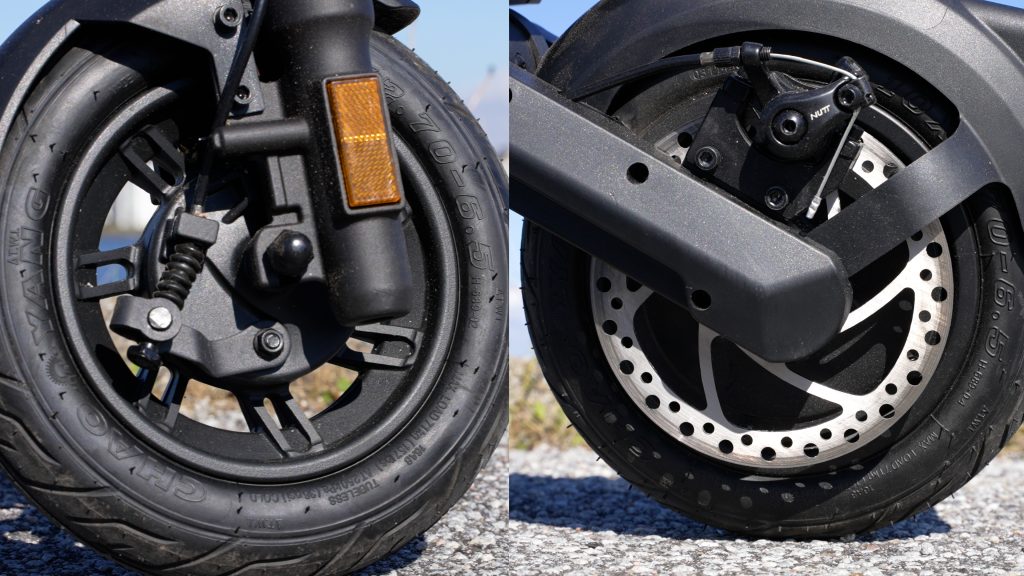
The front disc + rear drum + regen combo nails the sweet spot for a high-speed scooter. My testing showed an 11.4-foot stopping distance from 15 MPH.
| Model | Braking Distance | Brake Type |
|---|---|---|
| NIU KQi 300X | 10.7 ft | Dual disc + regen |
| Segway Ninebot Max G3 | 10.8 ft | Dual disc + regen |
| Vmax VX2 Hub | 11.4 ft | Disc + drum + regen |
| Vmax VX2 Pro GT | 12.2 ft | Dual drum + regen |
That’s well within the safe range for this speed class. Dual discs would be overkill and more maintenance, so this setup makes sense. The regen braking feels smooth and progressive, not grabby like some systems.
Cockpit & Controls
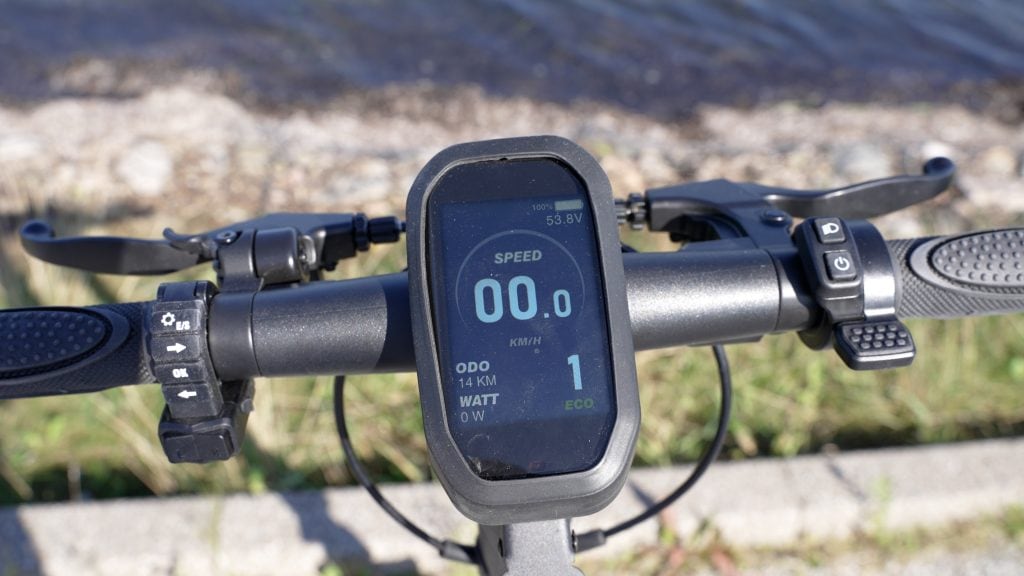
The cockpit is excellent. The display is large, bright, and protected by a rubber gasket for water resistance. I could read it clearly even in direct sunlight, which is rare.
The settings interface is really nice and intuitive, compared to the non-descriptive P-settings some scooters have. Unlike Segway and NIU, you’re also not forced to use their smartphone app to customize settings (and unlock your ride in the first place).
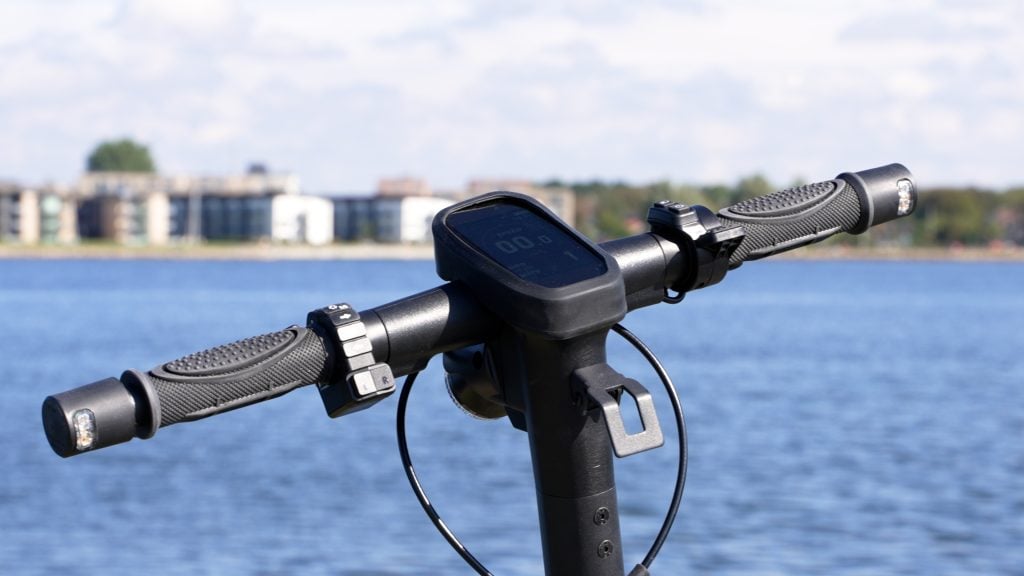
The handlebars are wide without being excessive, and the grips have a nice texture that isn’t too thick. All buttons are tactile with good feedback. The throttle response is smooth and gradual. No jerky inputs or lag.
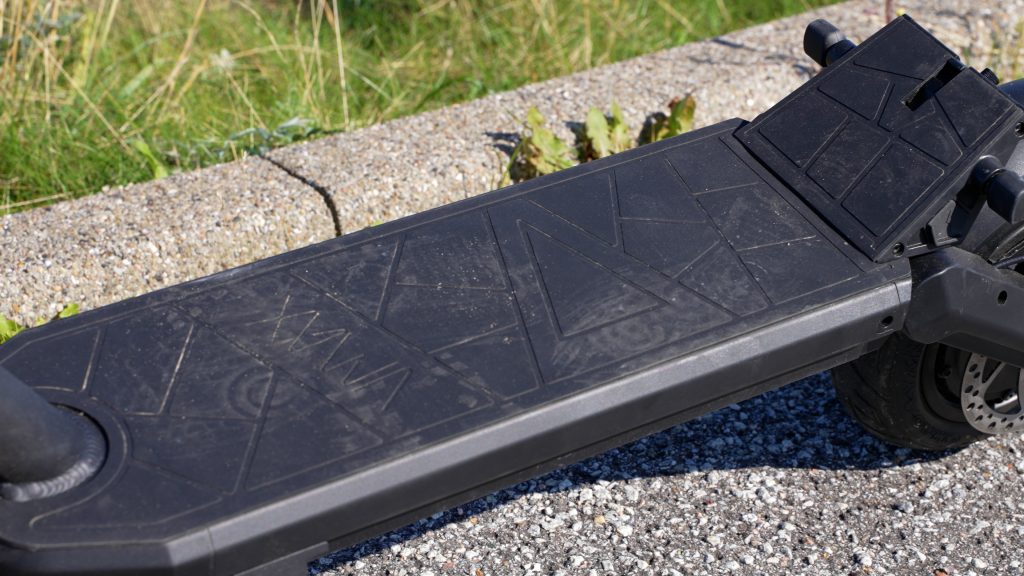
The deck is spacious with a large rear footrest that’s perfect for shifting weight during acceleration and braking. Definitely tall rider approved with that 39.7″ deck-to-handlebar height.
Lights & Visibility
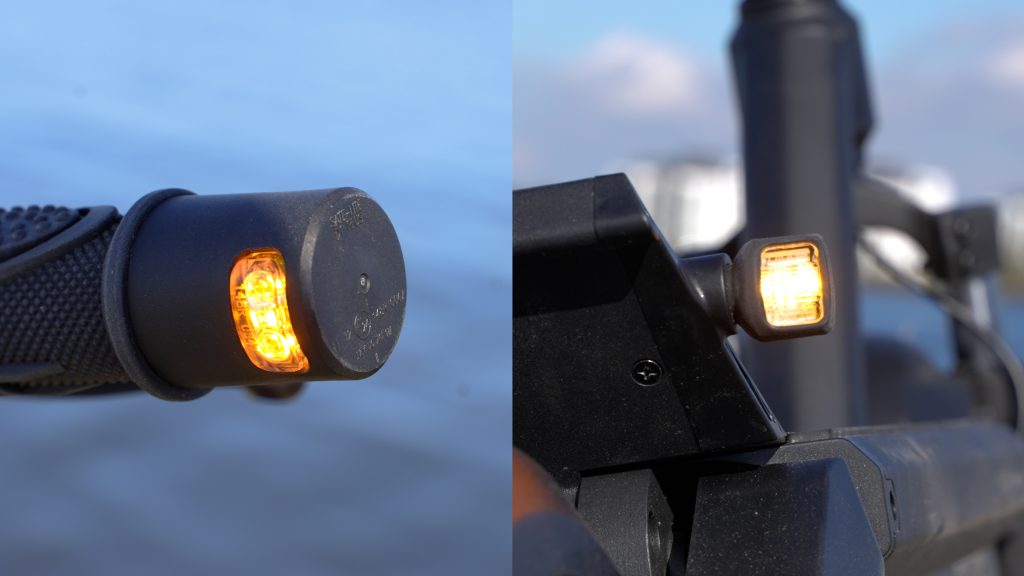
You’ve got turn signal indicators at the handlebar ends and on the sides of the footrest. The headlight provides good visibility, and having those side lights adds an extra safety element most scooters skip.
Overall, the ride quality is practically perfect. The only model that edges it out slightly is the Max G3 with its dual hydraulic suspension, but we’re talking marginal differences at that point.
Portability
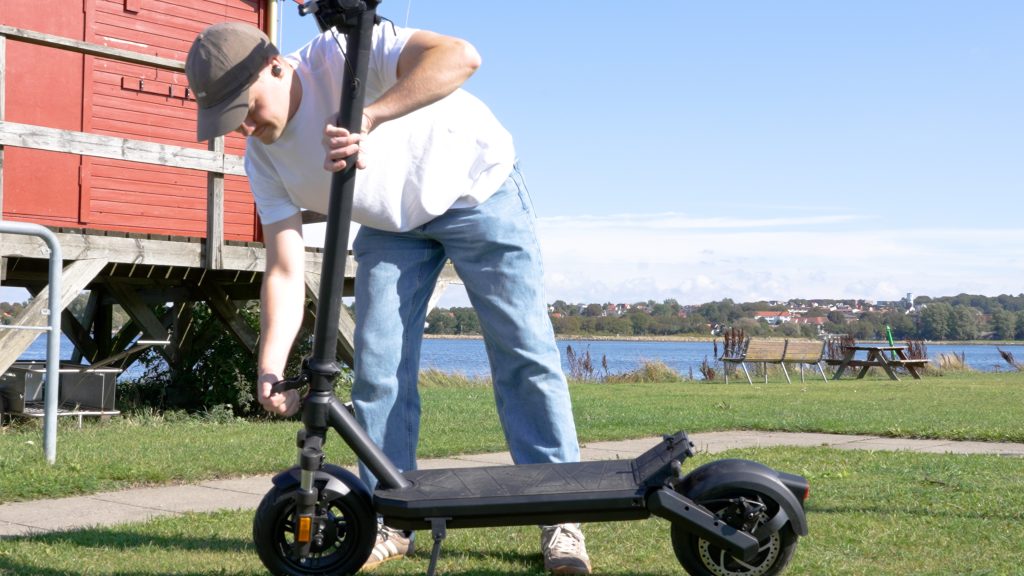
At 57.1 pounds for the 18.2Ah version (54.9 lbs for the 13Ah), the VX2 Hub isn’t winning any portability awards. But it’s more manageable than the numbers suggest.
Weight Comparison
| Model | Weight |
|---|---|
| Vmax VX2 Pro GT | 45.6 lbs |
| NIU KQi 300X | 48.7 lbs |
| Segway Ninebot Max G3 | 54.2 lbs |
| Vmax VX2 Hub (13Ah) | 54.9 lbs |
| Vmax VX2 Hub (18.2Ah) | 57.1 lbs |
The difference between the 13Ah and 18.2Ah versions and the Max G3 is barely worth mentioning in practice. They feel the same to carry.
Folding Mechanism
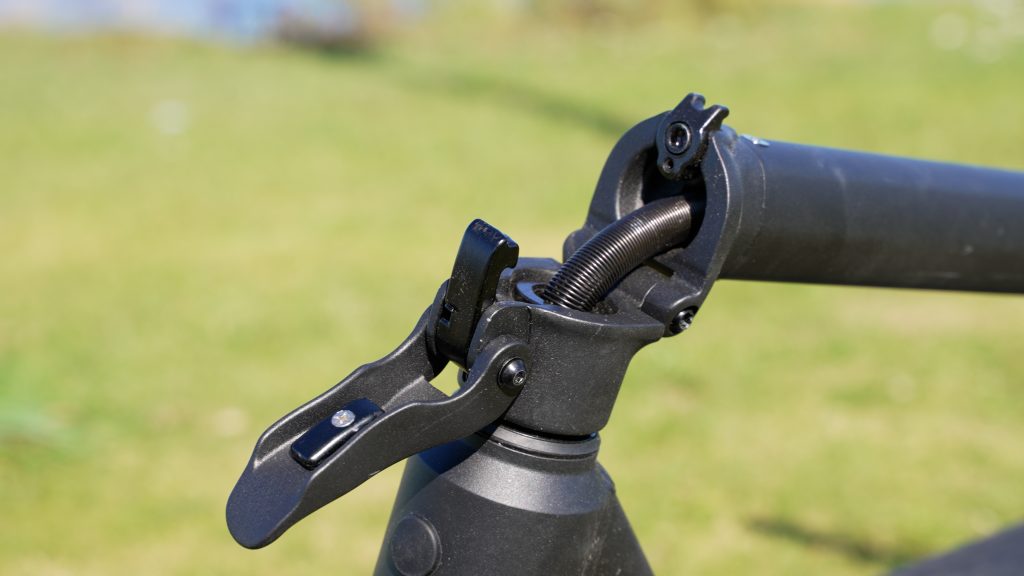
The folding mechanism works smoothly without requiring excessive force. The rear hook is easy to use, and there’s a safety pin to prevent accidental unfolding.
The weight distribution when folded is nearly centered, maybe slightly toward the rear.
Carrying
At 175 pounds, I find it manageable to carry for short distances. Loading into a car trunk, carrying up a flight of stairs is totally doable. But if you live on the 4th floor with no elevator, you’ll feel those 57 pounds every day.
This isn’t really the scooter you’d haul onto public transport regularly. But that’s not what it’s designed for. This is a long-distance commuter, not a last-mile commuter. The extra weight compared to the 300X and VX2 Pro is noticeable but justified in my opinion. You get full suspension, a bigger battery, and a stronger motor.
If portability is your top priority, you’ll have to sacrifice in a lot of areas and consider the Apollo Go or the NIU KQi Air.
Build Quality & Features
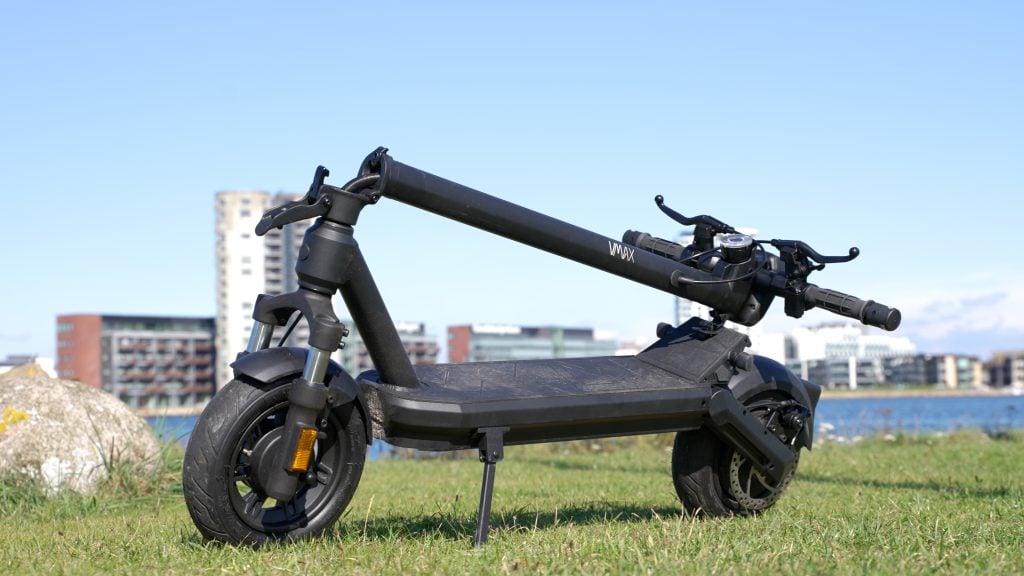
After 200 miles of testing, the VX2 Hub feels built to last. It’s heavy-duty and just feels like a proper machine.
Construction & Durability
The frame feels rock solid with clean welds and properly sized tubing. No obvious weak points or areas of concern. I pulled and stressed various parts of the frame and experienced no flex, no creaking, nothing concerning.
I simulated long-term wear by folding the mechanism 200 times and flipping the kickstand 500 times. Both held up perfectly without developing any play or looseness. The kickstand could be a centimeter longer for ideal weight distribution, but it’s stable enough as is.
The fenders deserve a mention. The front is mounted with 4 screws and 2 contact points, covering just what’s needed without being unnecessarily long. The rear connects at 4 points and feels super sturdy.
Weather Resistance
The IPX6 rating is a highlight if you plan to ride in the rain. I get caught in Danish rain regularly, and the VX2 Hub handles it without any issues. All electronics and connections are clearly well-protected. This is a proper all-weather commuter.
App & Features
The app is basic at best, and that’s actually refreshing. Vmax went a different route. They put all the controls on the display itself. No forced app registration, no connectivity issues, no gimmicks.
The app exists if you want it, but I found it a bit buggy. The good news is you don’t need it. All settings can be adjusted through the display’s interface with proper labels, which is intuitive compared to the cryptic P-settings some scooters use.
I’d like more customization options. You can’t adjust the acceleration strength, and it’d be nice to be able to limit battery charging for longevity. But the basics are covered.
Verdict
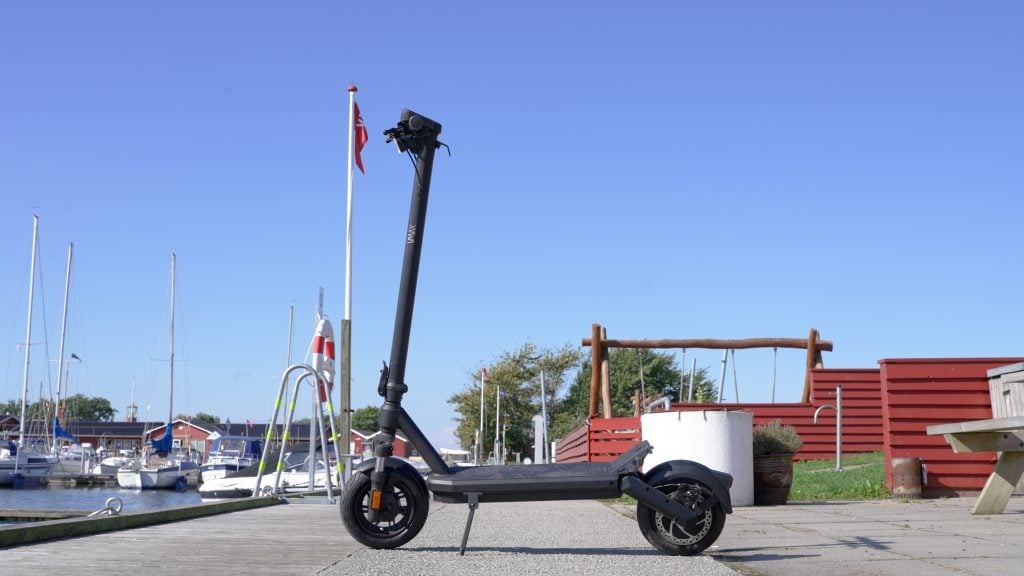
The Vmax VX2 Hub is an incredibly capable commuter that gets my full recommendation. It goes further and faster than the competition and feels incredibly well-engineered and heavy-duty throughout.
Vs The Competition
Here’s how the VX2 Hub holds up against its immediate competitors:
- Segway Ninebot Max G3: Similarly priced. The VX2 Hub is faster, climbs better, has longer range, and doesn’t force app use. The G3 may have a slight edge in ride comfort.
- NIU KQi 300X: Cheaper but significantly slower, less powerful on hills, shorter range, only front suspension.
- Vmax VX2 Pro GT: Cheaper and more portable, but much less comfortable and weaker motor performance.
Buy It If
- You want flagship performance
- Your commute includes hills or varied terrain
- You want an all-weather approved commuter
- You need 25+ miles of real-world range
- You're a taller/heavier rider who needs the performance overhead
- You prefer physical controls rather than an app
Skip It If
- You want a very portable scooter
- You're on a tight budget
- You only ride short distances on smooth roads
- You want deep app customization
Full specifications
Motor Performance
| Top Speed (Tested) | 33.5 mph |
| Top Speed (Claimed) | 33 mph |
| Motor Power | 500 W |
| Peak Power | 1900 W |
| Voltage | 48 V |
| Motor Config | Rear |
| Hill Climb Speed | 17 mph |
| Hill Grade | 19.3 ° |
| 0-15 mph | 2.9 s |
| 0-20 mph | 4.8 s |
| 0-25 mph | 7.0 s |
| 0-30 mph | 11.4 s |
Range & Battery
| Range (Fast) | 29.9 mi |
| Range (Tested) | 35.6 mi |
| Range (Slow) | 40.1 mi |
| Range (Claimed) | 56 mi |
| Battery Capacity | 874 Wh |
| Voltage | 48 V |
| Battery Type | Lithium-ion |
Ride Quality
| Suspension | Front hydraulic, Rear rubber |
| Tire Type | Tubeless |
| Front Tire Size | 10 " |
| Rear Tire Size | 10 " |
| Handlebar Height (min) | 39.7 " |
| Handlebar Height (max) | 39.7 " |
| Handlebar Width | 21.2 " |
| Footrest | Yes |
| Terrain Type | Street |
Portability & Fit
| Weight | 57.1 lbs |
| Max Rider Weight | 287 lbs |
| Folded Length | 45.5 " |
| Folded Width | 21.2 " |
| Folded Height | 21.7 " |
| Fold Mechanism | Stem |
| mph/lb | 0.59 |
| Wh/lb | 15.31 |
| mi/lb | 0.62 |
Safety
| Front Brake | Drum |
| Rear Brake | Disc (Mechanical) |
| Regen Braking | Yes |
| Brake Distance | 11.4 ft |
| Lights | Both |
| Turn Signals | Yes |
Features
| Features | App, Speed Modes, Cruise Control, Folding, Zero-Start, Push-To-Start, Turn Signals, Brake Curve Adjustment, Acceleration Adjustment, Speed Limiting |
| Throttle | Thumb |
| Kickstand | Yes |
Maintenance
| Tire Type | Tubeless |
| IP Rating | IPX6 |