
We earn commissions from links on our site, enabling us to deliver independent reviews. See our editorial policy.
Quick take
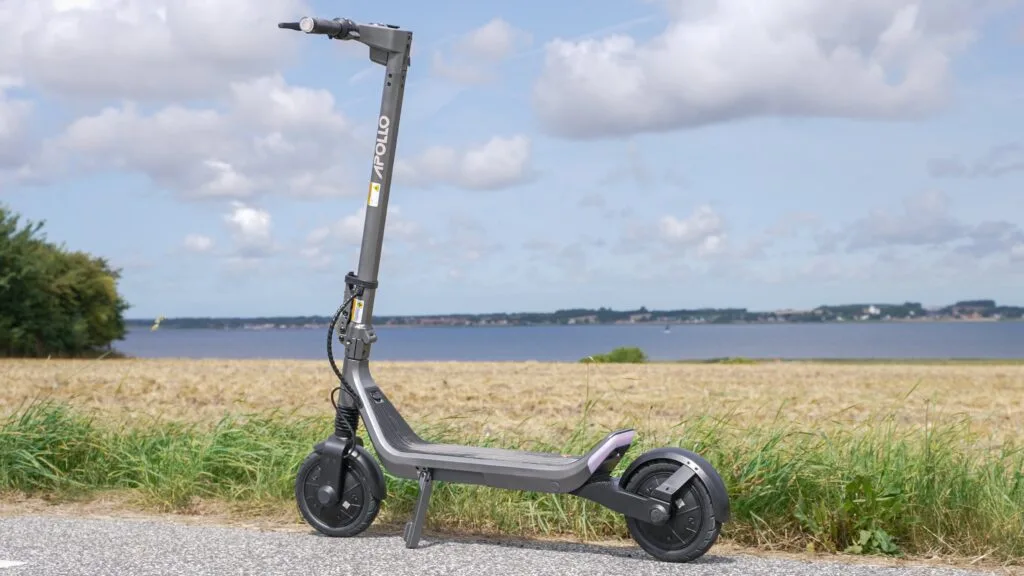
The Apollo Go is the most capable lightweight dual-motor scooter I've tested. It delivers exceptional acceleration and hill-climbing in a manageable 46-pound package. The 36V system drops some performance at low battery, but the dual motors, comfortable suspension, and low-maintenance design make it a no-brainer for demanding commutes.
What I like
- Super strong dual motor acceleration
- Climbs steep inclines with ease
- Very comfortable full suspension
- Pre-sealed tubeless tires and low-maintenance brakes
- Phone-as-display option via Apollo app
- IP66 weather resistance
- Turn signals with customizable auto-off
- Very lightweight for the hardware
What I don't like
- Folding mechanism could be more streamlined
- Performance drops at low battery due to 36V battery
- Rear latch can collect debris
- 9" tires not as plush as 10"+ alternatives
Where to buy
 Apollo Go

Tested performance
- Top speed
- 26.7 mph
- Range
- Range priority
- 23.7 mi
- Regular
- 19.8 mi
- Speed priority
- 15.4 mi
- Acceleration
- 0–15 mph
- 3.89 sec
- 0–20 mph
- 6.98 sec
- 0–25 mph
- 10.52 sec
- Hill climb
- 16.9 mph avg
- Braking
- 12.3 ft
The Apollo Go occupies a unique position in the market. Apollo packed dual-motor performance and full-suspension comfort into a lightweight package that commuters can actually carry. It’s challenging to design a scooter that ticks this many boxes without major sacrifices. After 150 miles of testing across varied terrain, I can confirm they’ve largely succeeded.
Speed & Motor Performance
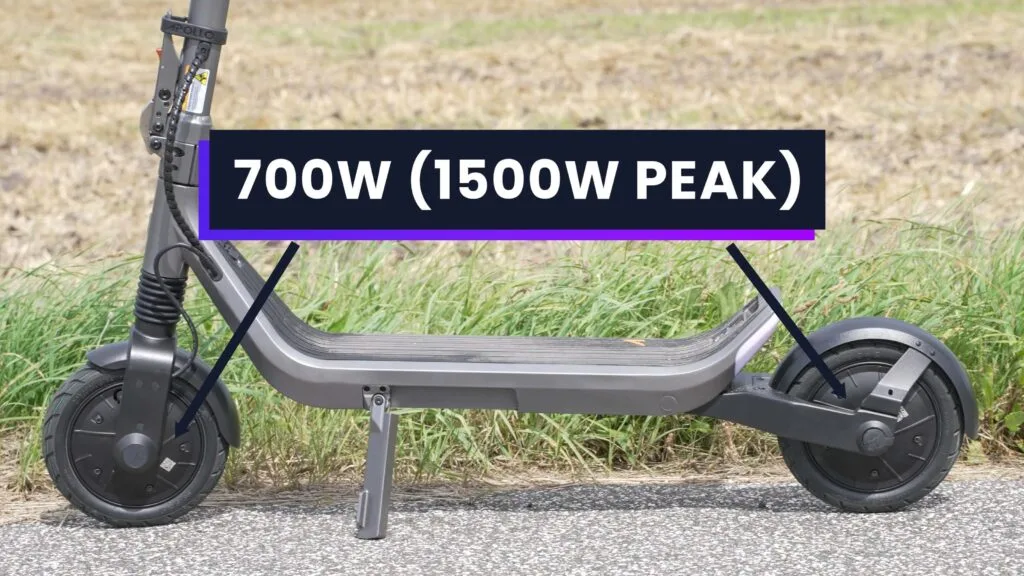
The Apollo Go’s 700W dual motor setup (1500W peak) delivers genuinely exciting performance—rapid acceleration, strong hill-climbing ability, and speeds to tackle the most demanding commutes.
Top Speed Test
I clocked the Apollo Go at 26.7 MPH in my tests, just shy of the advertised 28 MPH. This puts it in fast company:
| Model | Top Speed | Motor Setup |
|---|---|---|
| Apollo Go | 26.7 MPH | Dual (700W) |
| Splach Twin | 28.6 MPH | Dual (1200W) |
| NIU KQi 300X | 23.6 MPH | Single (500W) |
| Ninebot Max G2 | 22.4 MPH | Single (450W) |
The Go is, without a doubt, one of the fastest scooters under 50 pounds. It notably outpaces single-motor competitors and even dual-motor options like the Inmotion Climber. While the Splach Twin edges it out on raw speed, the Apollo Go feels much more stable at high speeds.
As expected from a 36V system, I saw a slight performance decline as the battery level depleted. The top speed was 25 MPH at 50% and 23 MPH at 20% while hill climbing remained strong. For most riders, this will be a non-issue, as the Go still beats the speed of most 48V alternatives in this weight class.
Acceleration Test
This is where dual motors truly shine. The Apollo Go rockets to 15 MPH in just 3.89 seconds:
| Model | 0-15 MPH | 0-20 MPH | 0-25 MPH |
|---|---|---|---|
| Splach Twin | 2.33 s | 4.40 s | 6.46 s |
| Apollo Go | 3.89 s | 6.98 s | 10.52 s |
| NIU KQi 300X | 3.84 s | 8.32 s | – |
| Ninebot Max G2 | 4.65 s | 8.51 s | – |
The Apollo Go gives you full control over the acceleration via the app. With 10 different settings, you can dial it from gentle to extremely zippy. On the first few meters, it’s about as fast as the NIU KQi 300X, but it quickly pulls ahead of all single-motor competitors.
It can’t quite keep up with the Splach Twin, but the power delivery feels smoother and more controlled on the Apollo Go.
Note
Acceleration tests were done in non-Ludo mode. Expect even stronger acceleration with Ludo.
Hill Climbing Test
My standard test hill (250 ft at 8% grade) barely fazed the Apollo Go, completing it in 10.1 seconds:
| Model | Time | Avg. Speed | Motor Setup |
|---|---|---|---|
| Splach Twin | 7.6 s | 22.4 MPH | Dual |
| Apollo Go | 10.1 s | 16.9 MPH | Dual |
| NIU KQi 300X | 11.1 s | 15.4 MPH | Single |
| Ninebot Max G2 | 11.6 s | 14.7 MPH | Single |
I put it to the true test on an ultra-steep 17% hill. The Apollo Go maintained an extremely impressive 12 MPH speed, which is by far the best I’ve measured in any scooter under 50 lbs.
The Apollo Go has more than enough torque for heavier riders as well. This is where the dual motors really earn their keep.
We test every ride
Independent reviews, buying advice and the real test data behind them. Straight to your inbox.
Join 2,000+ riders


Ride Quality
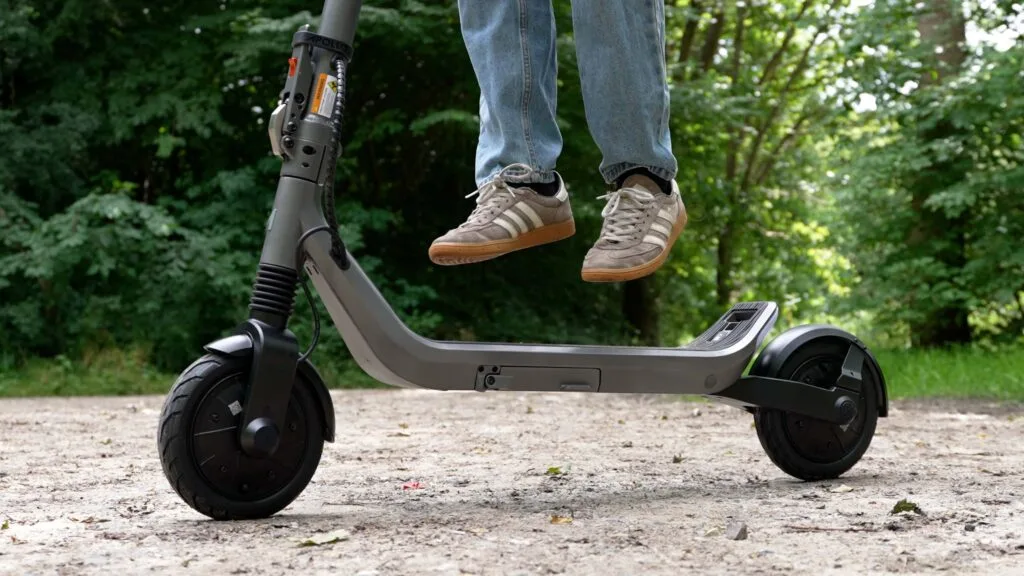
The Apollo Go is incredibly comfortable for its weight and power level. The full suspension is tuned well, it’s stable at speed and handles nicely, and the tubeless tires take care of vibrations.
Tires & Suspension
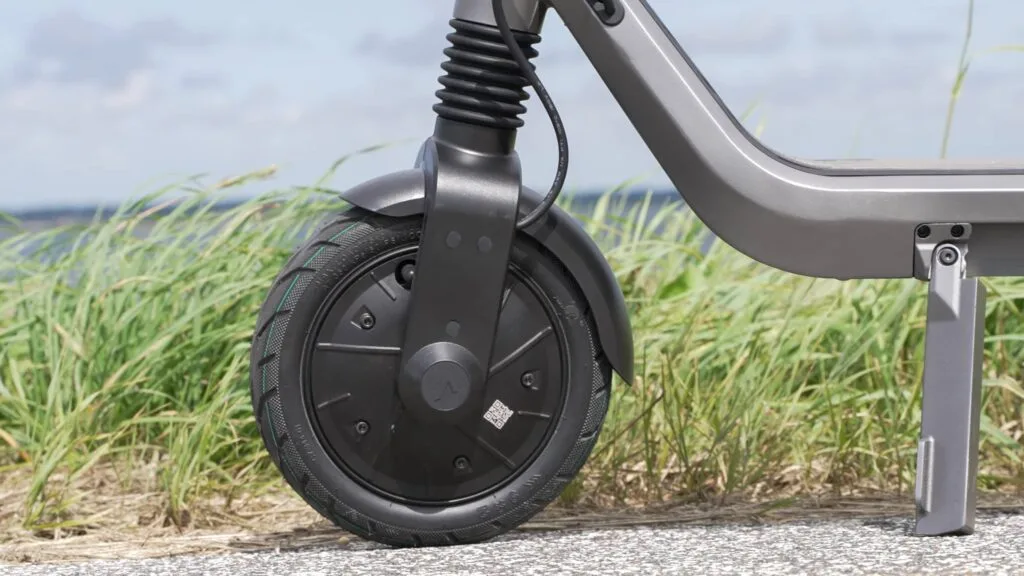
The combination of front spring and rear rubber suspension creates a surprisingly plush ride. While it doesn’t quite match the Segway Ninebot Max G2’s hydraulic setup (which I’d rate 10/10), the Apollo Go gets a solid 9/10.
The 9″ x 2″ tubeless pneumatic tires come pre-sealed and have maintained pressure very well throughout testing. I only needed to top them off once after around 100 miles. They aren’t as cushiony as 10″+ tires, but it’s a fair midground that keeps the scooter comfortable and nimble.
I tested the Apollo Go in all kinds of road conditions. Cobblestones that would rattle solid-tire scooters get absorbed nicely. The tires feel grippy on wet roads, and on hardpacked trails everything stays stable and predictable.
The suspension is tuned really well for riders anywhere between 140-265 lbs. At 175 lbs, I found it perfectly balanced. It’s responsive enough to absorb bumps without feeling bouncy or bottoming out. Also.
Braking
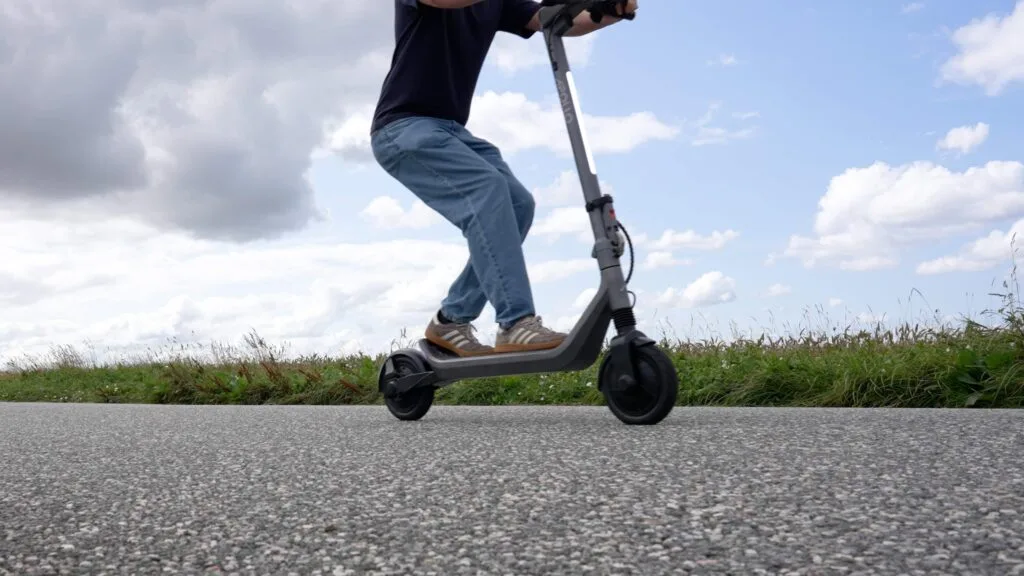
Apollo chose a single drum brake with electronic regenerative braking, and it’s the right call for this scooter. My testing showed a 12.3-foot stopping distance from 15 MPH:
| Model | Braking Distance | Brake Type |
|---|---|---|
| NIU KQi 300X | 10.7 ft | Dual disc + regen |
| Ninebot Max G2 | 11.7 ft | Dual drum + regen |
| Apollo Go | 12.3 ft | Drum + regen |
| Splach Twin | 11.6 ft | Dual drum + regen |
While not the shortest stopping distance, it’s well within the safe range (anything under 15 feet is good). The real win is maintenance. Drum brakes are virtually maintenance-free compared to discs that need regular adjustment and pad replacement.
The regen braking also impressed me. Unlike some systems that feel grabby or unpredictable, Apollo’s regen is butter-smooth. You can use it independently from the mechanical brake, which I love for gentle deceleration and extending range. The app allows you to adjust the strength from 1 to 10, so you have full control over the feel.
Cockpit & Controls
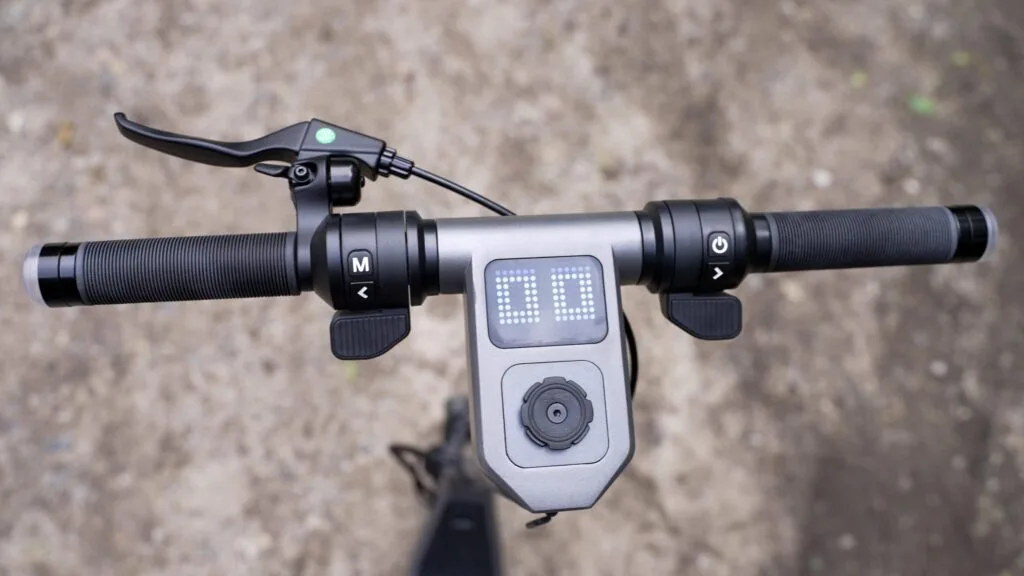
The 20.5″ wide handlebars feel right. Not too wide, not too narrow. The rubbed grips are comfortable on longer rides and the controls are exactly where you expect them. Both thumb inputs are padded and smooth with low input latency.
The phone mount setup is interesting. Apollo includes a Quad Lock adhesive mount that turns your phone into the main display, showing speed, battery, distance, everything. I stick with the basic dot-matrix display myself, but I can see riders who like having all their stats on a big bright screen really appreciating this feature.
The dot-matrix display is surprisingly bright on its own and shows the most important details at a glance.
Lights & Visibility
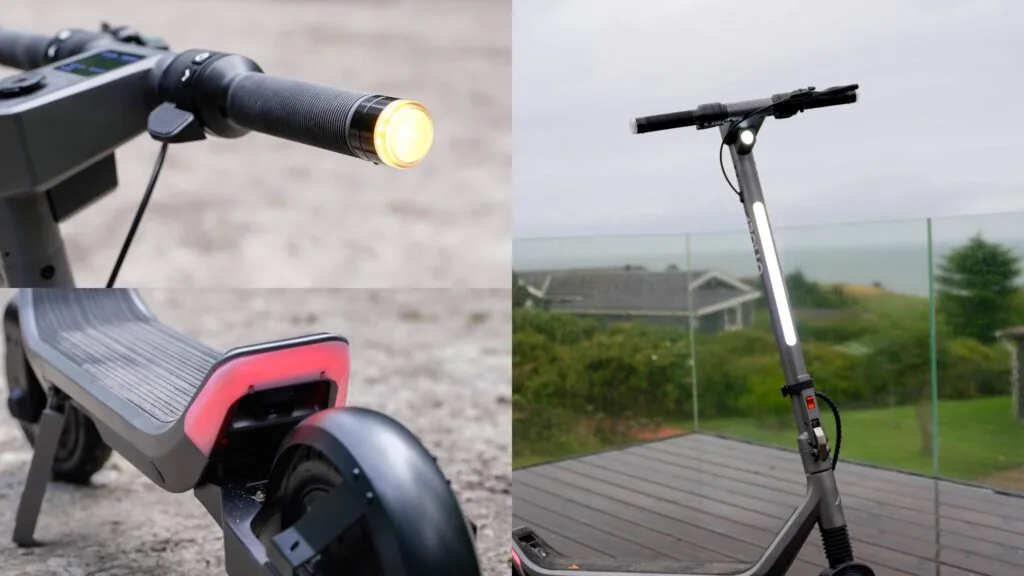
Safety features often get cut on mid-range scooters, but not here. The Apollo Go includes:
- Ultra-bright handlebar-mounted headlight (visible even in daylight)
- Brake-activated taillight
- Turn signals at handlebar ends and integrated into the tail
The turn signals are particularly well-implemented. You can toggle between auto-cutoff or manual control in the app – I prefer manual to avoid them cutting off mid-turn at intersections. Having proper turn signals at this price point is refreshing and significantly boosts safety in traffic.
Range & Battery Performance
The Apollo Go packs a 540Wh battery (36V, 15Ah) that delivers respectable range for a dual-motor scooter. While not class-leading, it provides enough juice for most urban commutes.
Range Tests
I conducted my standard three range tests at different speeds to see how the Apollo Go performs in the real world.
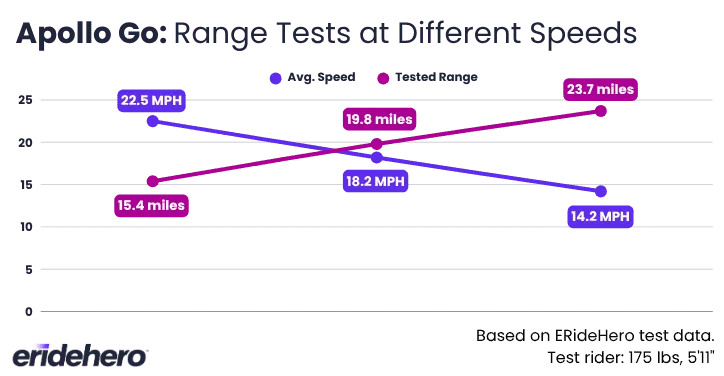
| Test | Range | Avg. Speed |
|---|---|---|
| Speed Priority | 15.4 miles | 19.8 MPH |
| Regular | 19.8 miles | 15.2 MPH |
| Range Priority | 23.7 miles | 12.1 MPH |
That 19.8-mile regular range is ample for most commutes. This is likely the most accurate real-world measure for most of you. For context, here’s how it compares:
| Model | Regular Range | Battery | Motors |
|---|---|---|---|
| Ninebot Max G2 | 29.8 miles | 551Wh | Single |
| NIU KQi 300X | 26.8 miles | 608Wh | Single |
| Splach Twin | 25.7 miles | 748Wh | Dual |
| Apollo Go | 19.8 miles | 540Wh | Dual |
The Apollo Go’s range-to-weight ratio of 0.43 miles/lb reflects the efficiency trade-off of dual motors. You’re getting performance over maximum range, which makes sense for this scooter’s target use case. The 7.5-hour charge time is standard, though they have a fast charger available if you wanna cut that in half.
Portability
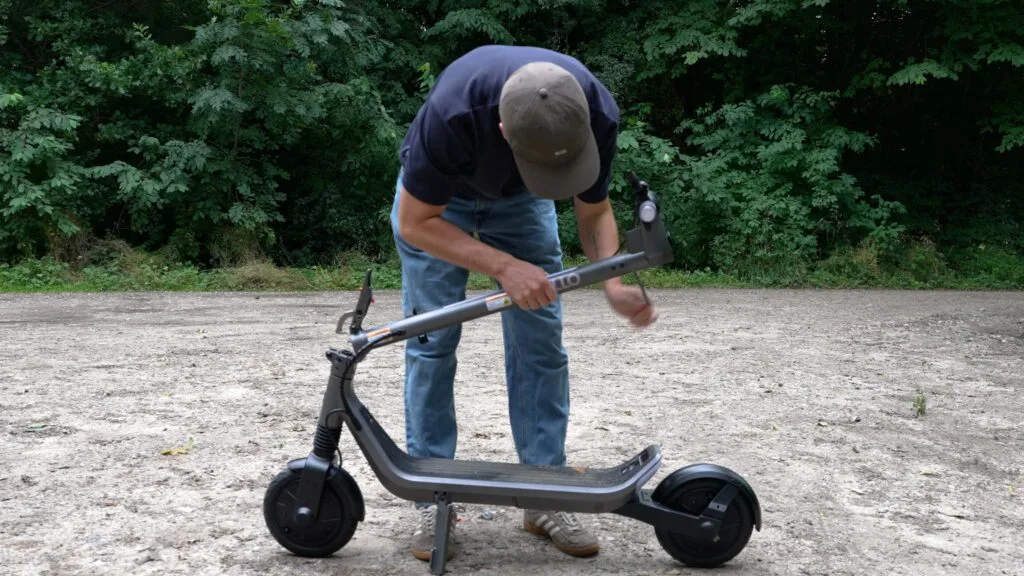
At 46 pounds, the Apollo Go is the lightest scooter I’ve tested to deliver this level of performance. There aren’t many dual motor scooters you’ll wanna carry, but the Go is a rare exception.
| Model | Weight | Motor Setup |
|---|---|---|
| Apollo Go | 46 lbs | Dual motor |
| NIU KQi 300X | 48.7 lbs | Single motor |
| Splach Twin | 52 lbs | Dual motor |
| Ninebot Max G2 | 53.5 lbs | Single motor |
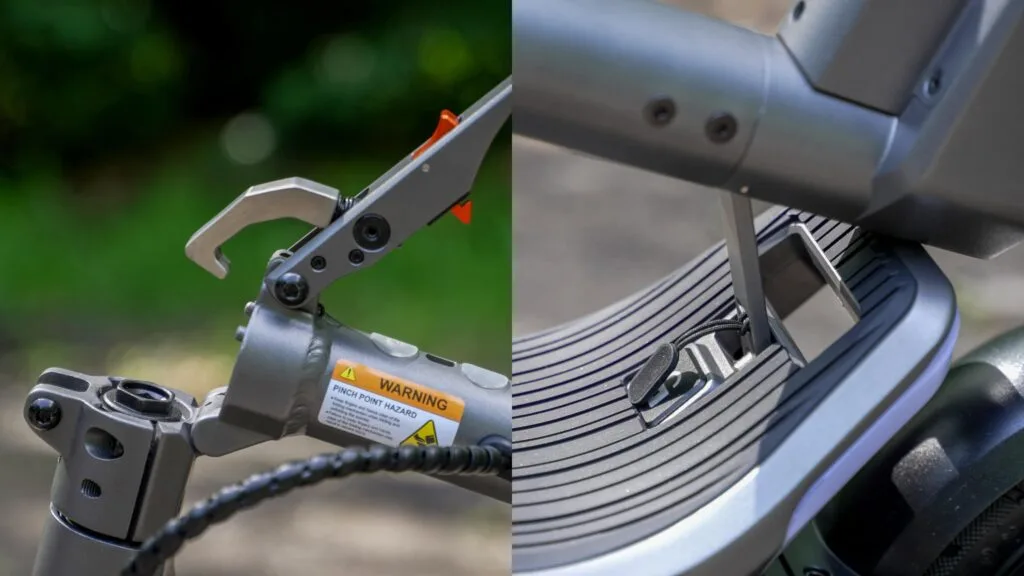
The folding mechanism works, but it isn’t as refined as NIU’s one-handed operation. It requires aligning the latch with the rear fender hook, which takes a moment to get right. However, it’s rock-solid once latched – I simulated wear by folding it 200 times with no loosening or play. A safety pin and rubber band provide double protection against accidental unfolding.
One minor annoyance: the rear latch can collect debris. I had some sand jam the mechanism, but it was relatively easy to clean. It’s not a big deal, and the 46-pound weight is just very manageable for daily carrying. You generally won’t find this level of performance in other scooters at this weight.
Build Quality & Features
After 150 miles of pushing the Apollo Go hard in varied conditions, I’m very impressed with the build quality. There’s attention to detail, and design choices are clearly based on continual iterations.

The fenders are extra thick with three contact points at the rear. They don’t rattle or flex when you hit bumps. After all my testing, they’re still perfectly aligned and secure.

The kickstand holds the scooter at just the right angle. I simulated wear by flipping it 500 times. It did need a minor retightening, but it doesn’t feel flimsy at all. It’s wide enough to be stable on uneven ground, and the spring tension is just right.
The frame feels rock solid with no flex or creaking, even when you really lean into turns or hit rough patches at speed. The welds look clean, the cable routing is tidy, and nothing has developed any play or looseness.
The IP66 rating means the Apollo Go was designed with weather changes in mind. I’ve ridden in the rain multiple times and water never got where it shouldn’t. The display keeps working, the throttle stays responsive, and I haven’t had any electrical issues.
App & Smart Features
The Apollo app generally works well, although I had some issues with Bluetooth disconnecting that eventually resolved themselves. Overall, the app – paired with the Apollo Go – has more features and customization options than most competitors.
- Speed modes with per-mode settings
- Acceleration strength (1-10)
- Regenerative brake strength (1-10)
- Cruise control and optional zero-start
- Turn signal manual vs. auto-cut-off toggle
- Detailed ride statistics and battery health
- Scooter tracking and report stolen
Alternatives to Consider
For pure range: The Segway Ninebot Max G2 offers 50% more range with superior ride quality, but costs similar money with less power and acceleration. Heavier.
For 48V performance: The NIU KQi 300X delivers better performance retention throughout the battery charge and includes front suspension, but lacks the hill-conquering ability of dual motors. It is also heavier.
For budget dual motors: The Inmotion Climber provides dual motor power for less money, but sacrifices suspension, turn signals, and overall refinement.
For maximum performance: The Splach Twin offers more raw power and range, but with harsh solid tires and a heavier build.
Verdict
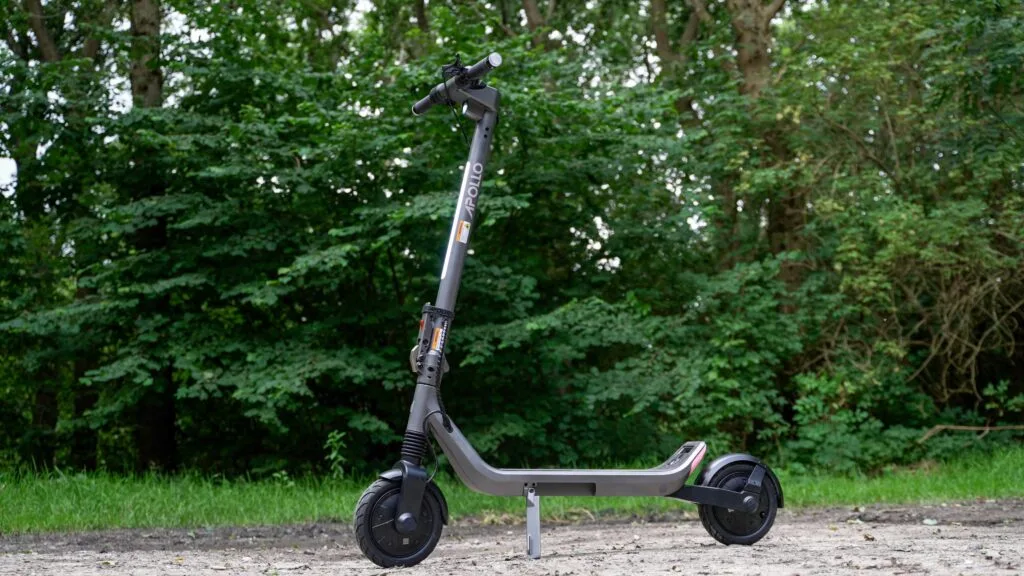
The Apollo Go brings dual-motor performance to the mainstream commuter market. At 46 pounds with a tested 26.7 MPH top speed, it proves you don’t need a heavyweight scooter for serious output.
Who Should Buy It
- Riders in hilly areas who need reliable climbing power
- Heavier riders up to 265 lbs
- Anyone wanting dual-motor performance without the bulk
- Tech-forward riders who want app integration
- Commuters who value acceleration and nimble handling
Who Should Look Elsewhere
- Need 25+ miles of range regularly
- Are budget-conscious (single motors offer better value)
- Prefer maximum simplicity
Overall, the Apollo Go delivers on its promise. It manages to be powerful, portable, and comfortable without any major weak spots. This is harder to pull off than it sounds, and most scooters at this price fail somewhere.
The dual motors really shine on inclines and make a huge difference for heavier riders. The whole package feels refined and well-thought-out. I’ve tested a lot of scooters, and getting this kind of performance under 50 pounds is genuinely impressive. Even more impressive is that it stays comfortable whether you’re cruising smooth pavement or dealing with wet, uneven roads.
Full specifications
Motor Performance
| Top Speed (Tested) | 26.7 mph |
| Top Speed (Claimed) | 28 mph |
| Motor Power | 700 W |
| Peak Power | 1500 W |
| Voltage | 36 V |
| Motor Config | Dual |
| Hill Climb Speed | 16.9 mph |
| Hill Grade | 25 ° |
| 0-15 mph | 3.9 s |
| 0-20 mph | 7.0 s |
| 0-25 mph | 10.5 s |
| 0-Top | 14.8 s |
Range & Battery
| Range (Fast) | 15.4 mi |
| Range (Tested) | 19.8 mi |
| Range (Slow) | 23.7 mi |
| Range (Claimed) | 30 mi |
| Battery Capacity | 540 Wh |
| Voltage | 36 V |
| Charge Time | 7.5 h |
| Battery Type | Lithium-ion |
Ride Quality
| Suspension | Front spring, Rear rubber |
| Tire Type | Tubeless |
| Front Tire Size | 9 " |
| Rear Tire Size | 9 " |
| Tire Width | 2 " |
| Deck Length | 21.7 " |
| Deck Width | 6.3 " |
| Ground Clearance | 5.8 " |
| Handlebar Height (min) | 39 " |
| Handlebar Height (max) | 39 " |
| Handlebar Width | 20.5 " |
| Footrest | Yes |
| Terrain Type | Street |
Portability & Fit
| Weight | 46 lbs |
| Max Rider Weight | 265 lbs |
| Folded Length | 46.5 " |
| Folded Width | 20.5 " |
| Folded Height | 22.8 " |
| Fold Mechanism | Stem |
| mph/lb | 0.58 |
| Wh/lb | 11.74 |
| mi/lb | 0.43 |
Safety
| Front Brake | None |
| Rear Brake | Drum |
| Regen Braking | Yes |
| Brake Distance | 12.3 ft |
| Lights | Both |
| Turn Signals | Yes |
Features
| Features | App, Speed Modes, Cruise Control, Folding, Zero-Start, Push-To-Start, Turn Signals, Brake Curve Adjustment, Acceleration Adjustment, Speed Limiting, OTA Updates |
| Throttle | Thumb |
| Kickstand | Yes |
Maintenance
| Tire Type | Tubeless |
| Self-Healing Tires | Yes |
| IP Rating | IP66 |