
We earn commissions from links on our site, enabling us to deliver independent reviews. See our editorial policy.
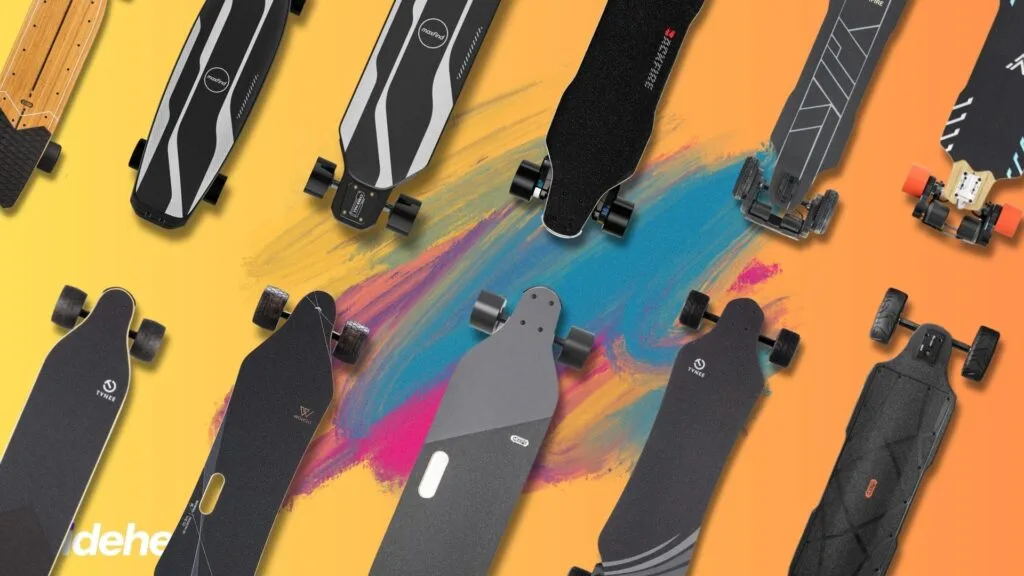
The 2026 electric skateboard market is better than ever. We’ve got more brands innovating and competing for the same customers, and that means better boards at lower prices. With so many good options, how do you pick the one that’s right for you?
I started ERideHero in 2019 to help e-riders find the right products. Since then, I’ve tested 120+ products across 12,000+ miles. This guide is the result, with the 12 electric skateboards I think stand out this year, each for a different kind of rider.
Top Picks at a Glance
WowGo 2S Max
Best budget longboard | 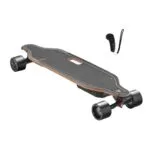
Meepo V5 (144Wh)
Best first board | 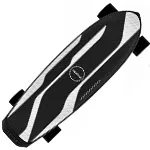
Maxfind Cyber Mini
Best mini under $500 | 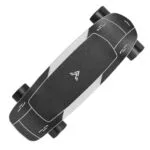
Acedeck Stella Blizzard (Belt)
Best specs for the money | 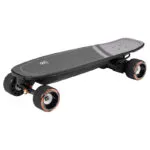
Tynee Mini 3 Pro (Belt)
Most powerful shortboard | 
OMW Lancer
Best mid-range ride quality | 
Maxfind Cyber Max X
Best range cruiser | 
WowGo Pioneer X5
Best mid-range longboard | 
Meepo Voyager X
Best gear drive value | 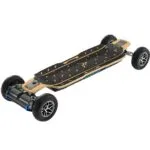
Acedeck Nomad N1 (Belt)
Best performance for money | 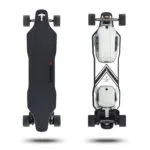
Backfire Zealot X2
Most refined longboard | 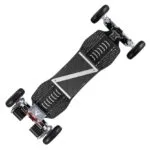
Acedeck Nyx Z3
Best mountainboard | |
|---|---|---|---|---|---|---|---|---|---|---|---|---|
Top Speed | 28 mph | 28 mph | 28 mph | 28 mph | 37 mph | 31 mph | 37 mph | 34 mph | 34 mph | 40 mph | 31 mph | 37 mph |
Peak Power | — | — | 2400 W | 6000 W | 5550 W | 5828 W | — | 5000 W | 5600 W | 7000 W | 4000 W | 10000 W |
Claimed Range | 14.3 mi | 11 mi | 15 mi | 31 mi | 31 mi | 34 mi | 37 mi | 22 mi | 30 mi | 40 mi | 34 mi | 37 mi |
Battery | 216 Wh | 144 Wh | 158.4 Wh | 518 Wh | 468 Wh | 504 Wh | 415 Wh | 504 Wh | 648 Wh | 1036 Wh | 504 Wh | 1036 Wh |
Weight | 18 lbs | 17.6 lbs | 16 lbs | 21.2 lbs | 20.4 lbs | 26.5 lbs | 24.2 lbs | 26.5 lbs | 24 lbs | 36 lbs | 27.1 lbs | 41 lbs |
| Price |
We test every ride
Independent reviews, buying advice and the real test data behind them. Straight to your inbox.
Join 2,000+ riders


Best Electric Skateboards Under $500
WowGo 2S Max
Best budget longboard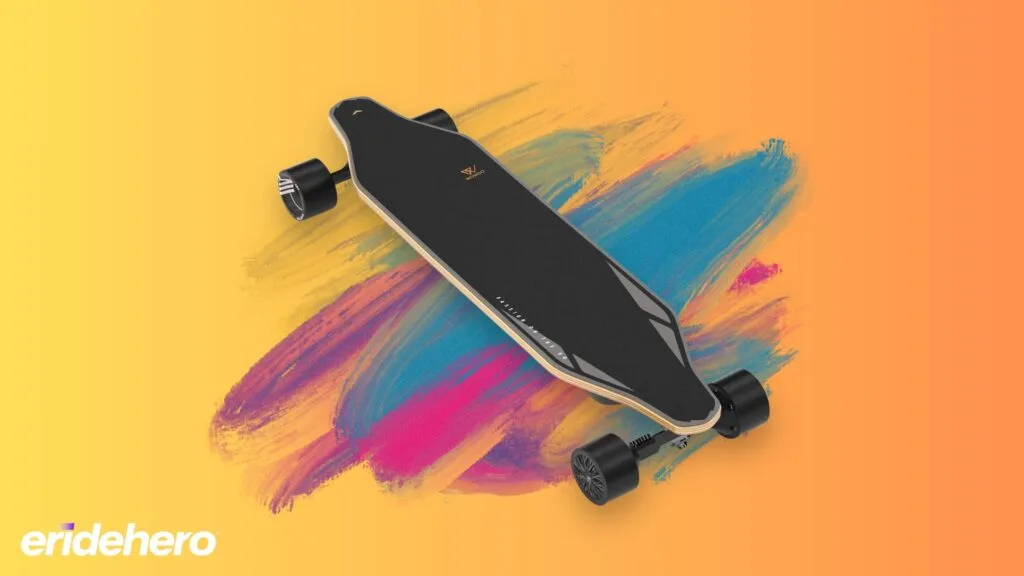
What I like
- A 12S battery and Hobbywing control, a voltage class above everything else at this price
- A real 38" flexy maple deck while rivals sell shortboards
- Hits its claimed 28 mph for average-weight riders
- Remote powers the board on with one press, no bending down
What I don't like
- Real range is ~10 miles, well short of the 14.3 claimed
- Foam grip tape mutes the deck feel when carving
The WowGo 2S Max is arguably the most reliable board you can buy under $400. It’s got an excellent long-term ownership track record across the community. Design-wise, it’s built to be simple and built to last. It runs a Hobbywing ESC, probably the most popular and proven in the industry, which gives you really smooth acceleration and braking. It also uses a 12S battery where pretty much everything else at this price runs 10S, so you get a bit more real-world power.
You get a 38-inch maple-and-bamboo deck and dual 550W hub motors with a claimed top speed of 28 mph. The battery capacity is 216Wh, which is about as good as it gets at this price. But expect about 10 miles of real-world range, not the claimed 14.3 miles. This is more a short commute and campus board than something for full-day riding, but that goes for anything at this price.
If you ride on rough roads, WowGo gives you the option to pick 105mm honeycomb wheels at checkout, which makes it a lot more comfortable to ride (at the expense of about 10% range).
Meepo V5 (144Wh)
Best first board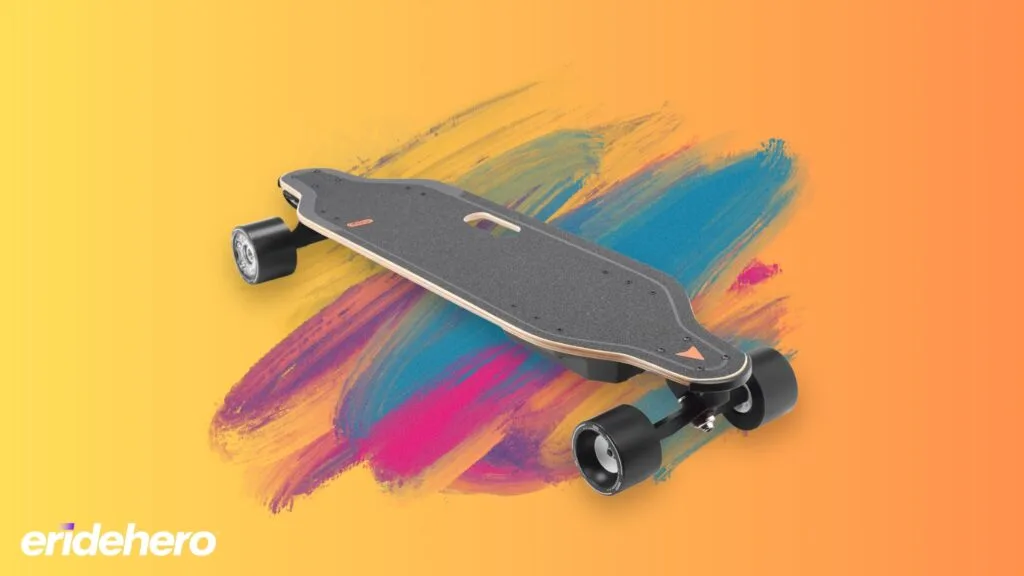
What I like
- 4 genuinely well-tuned ride modes, 1st very forgiving for learning
- Strong braking
- Only 17.6 lbs and with a cutout carrying handle
- 330 lbs load rating
- Easy access to replacement parts
What I don't like
- The 144Wh battery means 7 to 9 real miles ridden hard
- LingYi ESC is a step below Hobbywing ESC
The V5 is Meepo’s fifth generation of their entry board, and it’s been iterated on for years to be the best beginner board out there. Meepo uses a LingYi ESC, which doesn’t match the Hobbywing ESC on smoothness, but its four speed modes are much more gradual, which makes it perfect to learn on. The two lower modes in particular are really forgiving, and the braking is strong when you need it.
At 17.6 lbs, it’s the lightest full-sized electric longboard in this guide, and the deck has a cutout handle, which makes it easy to carry around, whether you’re taking it up stairs or onto the bus.
The V5 still has enough power to grow with, thanks to its dual 500W hub motors. It hits 28 mph, which gives it some of the best speed-to-price ratio on the market.
With a 10S 144Wh battery, you’ll get about 8 miles of real-world range, so this is a short-commute board.
Maxfind Cyber Mini
Best mini under $500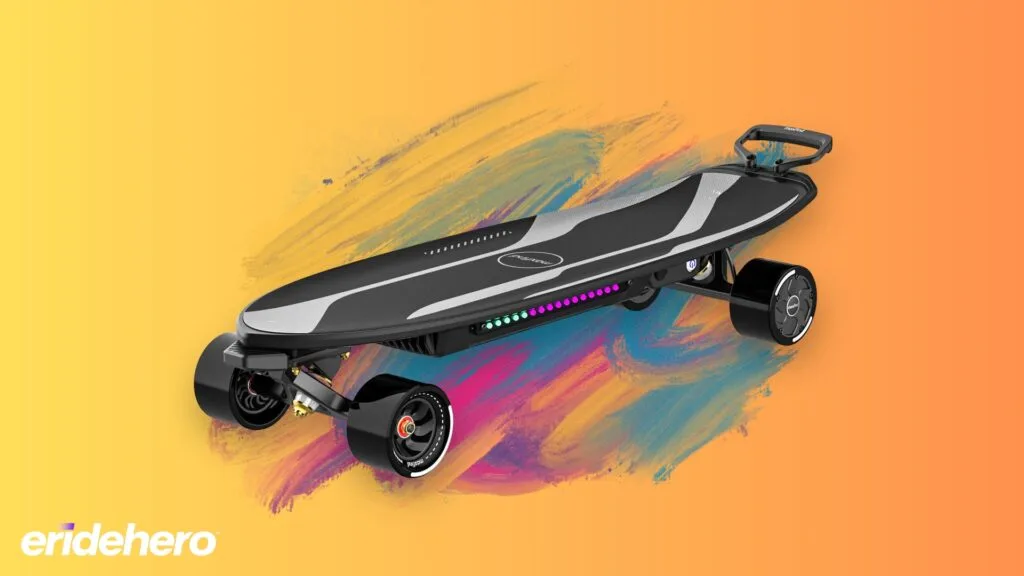
What I like
- PPS deck (not wood) won't warp from water exposure
- Best in class water resistance (IPX5)
- Super light 16 lbs kicktail, easy to carry
- Forged CNC trucks and unibody composite deck (rare at this price)
What I don't like
- The deck is rigid, not for uneven roads
- Small 158Wh battery, plan on 8 real-world miles range
The Cyber Mini is my favorite board from Maxfind. It’s an exceptionally well-designed kicktail cruiser, perfect for bringing with you on the go.
Maxfind has packed a lot of functionality and hardware into an ultralight package. Despite the modest 16-lb weight, it houses torquey 650W dual hubs and CNC-forged trucks.
The Mini’s biggest strength is its design. Rather than a classic deck, it uses a one-piece PPS composite that is incredibly sturdy and water-resistant (IPX5). It feels rigid, so ride it only on smooth paths, but the upside is that it’s pretty much impossible to wear down.
You’ve got a removable carrying handle, bumper protection, taillights, and app integration through the Hobbywing V6.0 ESC. The customizable RGB lights are also a nice detail that elevates the overall look.
The 10S 158Wh battery pack lands in the middle of what to expect at this price. But the motors are hungry at speed, so expect around 8 miles of range, not 15 (unless you ride very conservatively).
Best Mid-Range Electric Skateboards
Acedeck Stella Blizzard (Belt)
Best specs for the money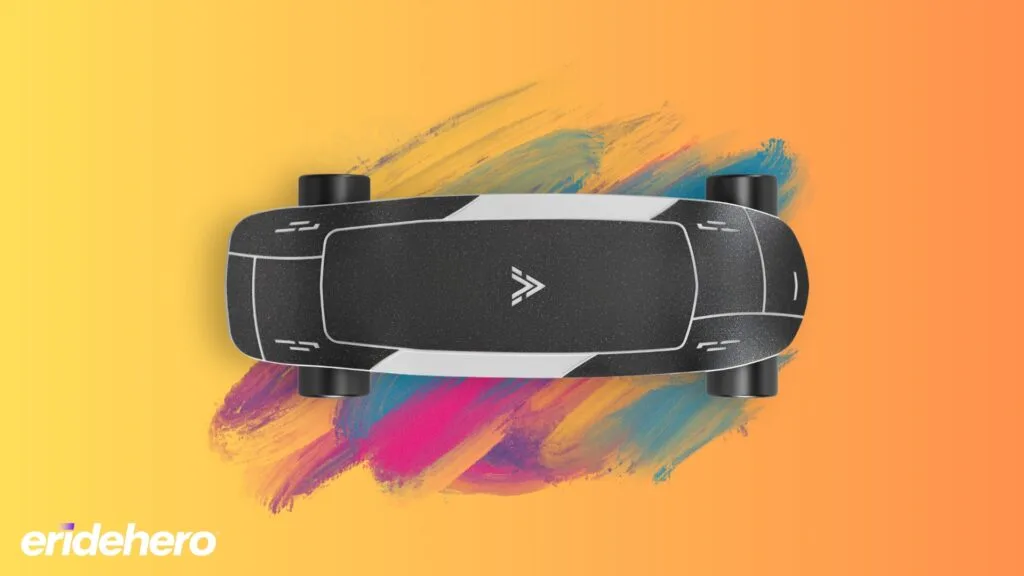
What I like
- The cheapest 14S system on the market
- Excellent real-world range from 518Wh Samsung battery
- Super punchy acceleration and strong 3,000W belt motors
- Ultra smooth throttle from the 100A FOC ESC
- Reverse-kingpin CNC trucks (competitors use castings)
What I don't like
- Stiff deck and hard 85mm wheels, not ideal for rough roads
- Spare parts are pricey, and electronics only come with 6-month warranty
The Stella Blizzard Belt is the most hardware per dollar. It runs a large 14S 518Wh Samsung pack, while most competitors at this price use 12S packs with notably less capacity. Expect about 23 miles of real-world range.
The 14S config makes it an incredibly strong board that’s quick off the line and conquers hills with ease, even right up to the very end of the charge, when lower-voltage batteries can start to sag.
The trucks are CNC-machined (the motor mounts, too), which is very rare at this price, and the 100A FOC ESC is tuned to perfection. Many entry-level belt boards will feel jerky off the line, but that isn’t the case here.
The deck is on the stiff side, and combined with the hard 85mm wheels, it’s best used on smooth pavement. On bad roads, you’ll feel the vibrations a lot. The wheels are upgradable, so if you wanna ride it on rough roads, upgrade to 90-105mm wheels.
Spare parts are fairly expensive, and the electronics are only covered under warranty for 6 months, which is a bummer. It makes sense, since the board is so value-packed, but there are plenty of 1-year-warranty boards in this price segment.
Tynee Mini 3 Pro (Belt)
Most powerful shortboard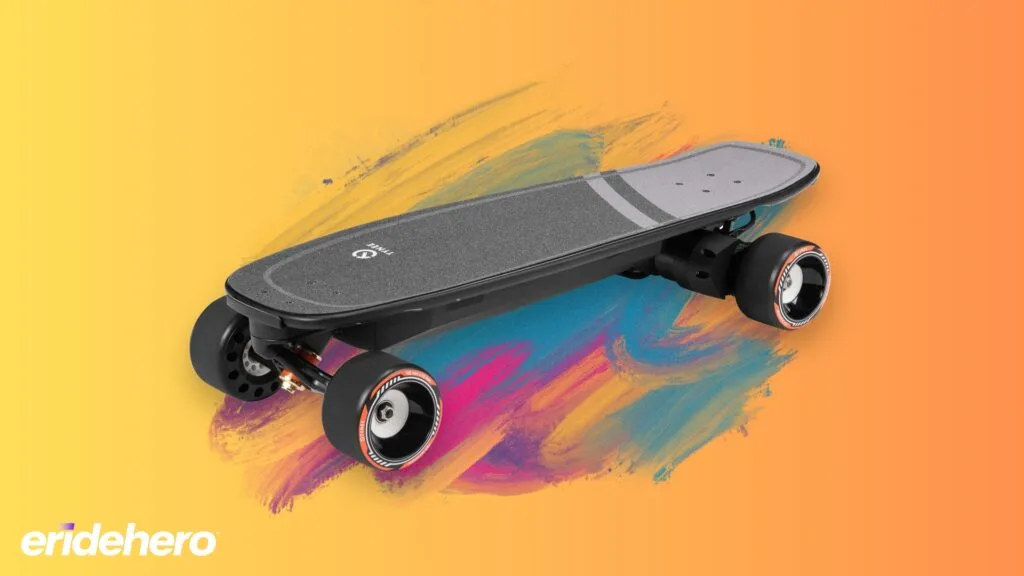
What I like
- Super strong launch from the 2775W belt motors
- New 2026 version with 19% more battery at a lower price
- The 105mm wheels are nice and soft, which makes it more versatile out of the box
- Hobbywing OLED remote with app tuning
- Arguably the strongest support reputation in the industry
What I don't like
- Belts wear quick with this much torque, so expect around 300 miles per set
- Mild concave doesn't give as much foot lock-in as the power deserves
- Only a 6-month warranty
If you’re after speed and rapid acceleration, this 29.6-inch kicktail board is the one to beat. The dual 2,775W belt motors deliver 32 mph out of the box but can be unlocked to a whopping 37 mph via the remote.
So much power in such a small package makes this a truly fun city board for technical riders who want to do kick turns and carve through tight gaps in traffic. Beginners will likely be overwhelmed.
It should be said that the Hobbywing ESC can be tuned down to your liking, so if you want more forgiving performance with headroom to grow into, that’s completely possible here.
The 2026 version of the Mini 3 Pro features an upgraded 468Wh Samsung pack that delivers 19% more juice than before, and the price has come down. Real-world range lands around 19 miles depending on how hard you ride.
The board is genuinely good on its own, but another reason to buy it is Tynee’s support. They’re widely regarded as having the best support in the industry. You get genuine WhatsApp replies within hours (no templated default answers), and many users even get free replacement parts shipped out. The warranty is only 6 months, but with Tynee’s track record, that’s a safer bet than most competitors.
OMW Lancer
Best mid-range ride quality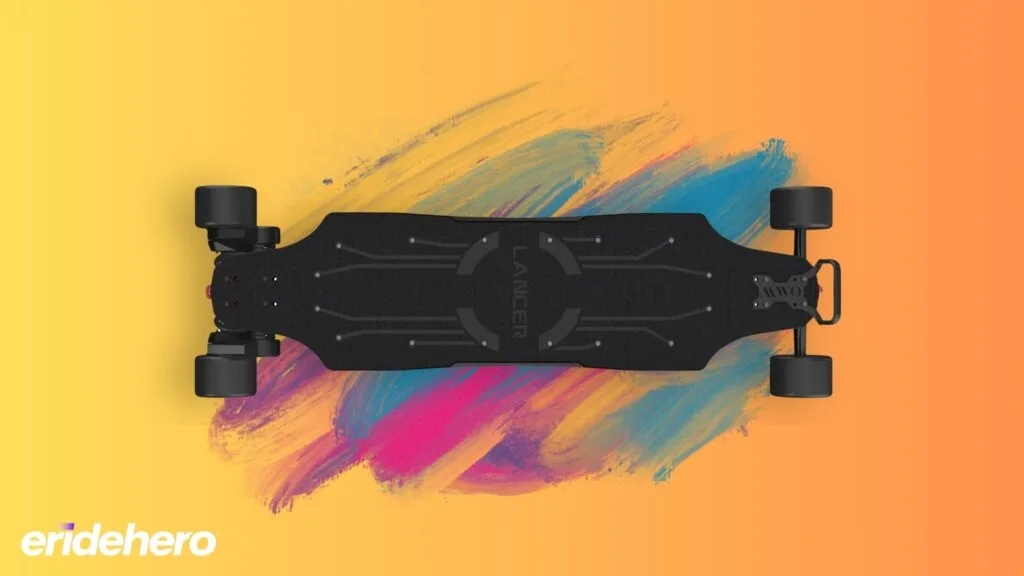
What I like
- Adjustable wheelbase with 3 flex settings
- Excellent forged TKP trucks that snap to center beautifully
- Best stock wheels at this price (105mm Mad Wheelz V2)
- Decent IP55 water resistance and 1 year warranty
- Super carvable deck with lifetime guarantee
What I don't like
- Not exactly a torque monster next to the Blizzard or Mini 3 Pro
- Big footprint at almost 40 inches
- OMW is still a young brand
The OMW Lancer is an excellent skateboard for commuters who put a comfortable ride over dirty acceleration.
The best feature of the Lancer is its adjustable wheelbase, which, in practice, works incredibly well. This lets you move the truck mounting positions to dial in flex to your liking. Shorten the wheelbase for a stiffer, more stable ride or extend it for full flex and carvability. Nothing else at this price offers this.
I’m a big fan of the 9.25-inch forged TKP trucks. They snap back to center perfectly, feel responsive, and still stay stable when you max out the 31-mph top speed. The 105mm Mad Wheelz V2 wheels are arguably the best stock wheels you’ll find at this price, too. Overall, the board is just more comfortable than its mid-range competitors.
By default, the board is tuned to be mild, but this can be customized via the companion app. The 14S 504Wh Samsung pack still packs a decent punch when needed, and you can expect about 22 miles of range from a full charge.
OMW is a relatively new brand (started in 2023), but so far they have an excellent track record, and long-term owners praise the Lancer. The board comes with a 12-month warranty (including electronics) and lifetime deck guarantee. The carbon composite will easily outlast regular wood ply.
Maxfind Cyber Max X
Best range cruiser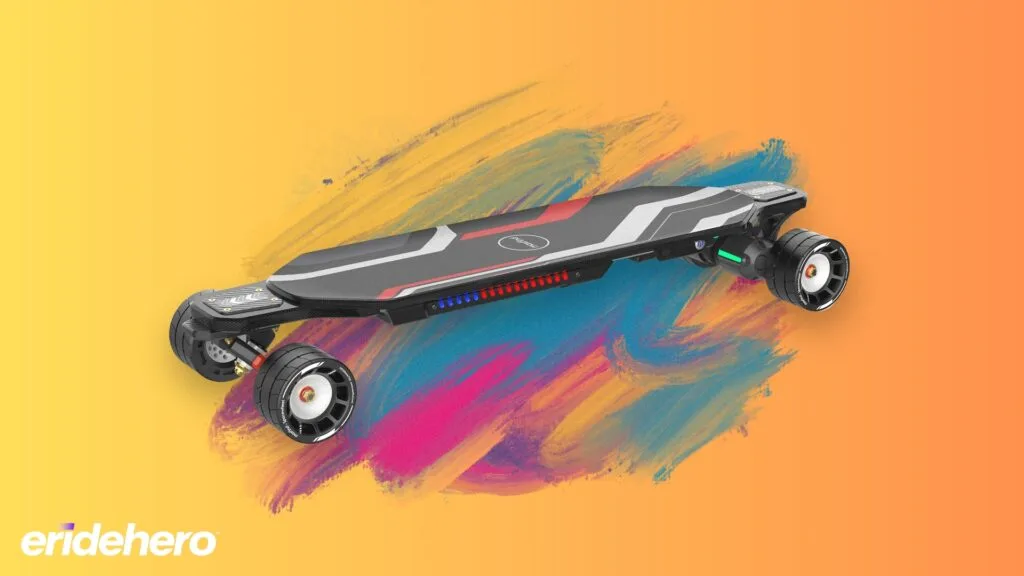
What I like
- Long range (28 miles tested)
- Comes with super comfy 107mm Spacewheels and quick-release hubs
- Super stable and beginner-friendly thanks to the 12-inch trucks
- Very practical with bumper guards, cooling and carrying handle
- IPX5 weather resistance and one of the best visibility setups
What I don't like
- Acceleration is tuned down despite the 3600W total motor output
- It's wide so not ideal for sharp turns and tight carving
- Claims 37 mph and 37 miles, but expect 35 mph and 28 miles
The Cyber Max X is geared for distance and stability. The 1,800W dual-belt motors sound aggressive on paper, but they’re tuned defensively, so power comes on smoothly and predictably.
In combination with the wide 12-inch forged trucks and the relatively stiff composite deck, it’s one of the most stable and beginner-friendly boards in the mid-range. It’s definitely not a sharp carver, so if you want a surfy, alive board, look at the Lancer instead.
This board truly delivers on range. The 12S 415Wh Samsung pack got us 28 miles of range in testing, which is excellent, even though it falls short of the claimed 37 miles. Same goes for the speed, where Maxfind claims 37 mph. Realistically, you’ll land closer to 35 mph.
The design is typical of Maxfind, with a composite deck that’ll outlast wood options with ease, and it’s very well protected against water ingress. It ships with 107mm Spacewheels, which are genuinely plush, and if you ever wanna switch to Cloudwheels or PU wheels, the hubs are quick-release.
The board also has a nice RGB lighting setup along the deck for visibility, plus bumper guards and a removable carrying handle, which is great for practicality reasons. The frosted deck surface is easy to clean, but it’s not as grippy as regular grip tape.
WowGo Pioneer X5
Best mid-range longboard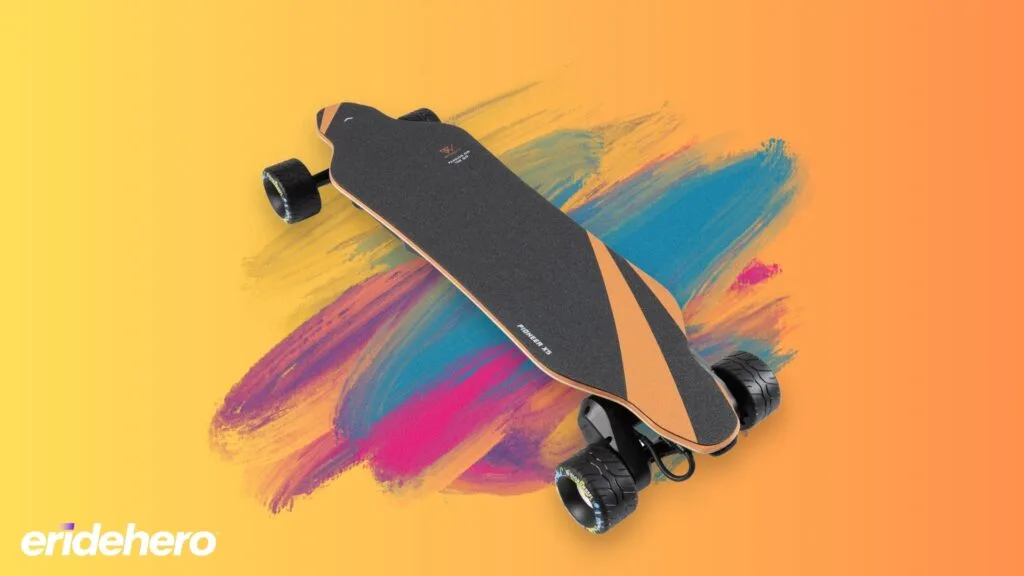
What I like
- Hit claimed top speed and range in our tests
- Brutal launch from 2500W motors at 14S battery
- Fully enclosed belt drive, keeps grit out and increases longevity
- Medium-flex maple and fiberglass deck absorbs vibrations very well
- Strong and well-tuned brakes that stop hard without losing traction
What I don't like
- Ultra-wide 9.2-inch trucks make turning radius lazy, not a carver
- Stiff stock bushings, worth an upgrade if you want a more responsive ride
The WowGo Pioneer X5 is built for stability at speed. The acceleration from the dual 2500W belt motors is incredibly strong, and the 9.2-inch RKP trucks are wider than anything else in this class. On the road, that means the board tracks 100% straight with no wobble even at full throttle. You do sacrifice something on carving and turning, but in turn you get the most confident high-speed ride under $1K.
WowGo equipped it with a 14S 504Wh Samsung battery, and tested range at 22 miles actually lives up to what the brand claims. Nice for a change, in an industry where every other brand inflates range specs to look more competitive.
The X5 caps at 34 mph, but it’s obvious there’s performance headroom. It effectively maintains the 34 mph top speed even at the end of its battery cycle.
The belts are enclosed which keeps debris out of the drivetrain, but at maximum lean the deck can touch them, although it takes a heavy rider and loose bushings to achieve that. The stock bushings are stiff, as intended for high-speed stability, but should you want a more reactive ride feel, you can always replace them.
Meepo Voyager X
Best gear drive value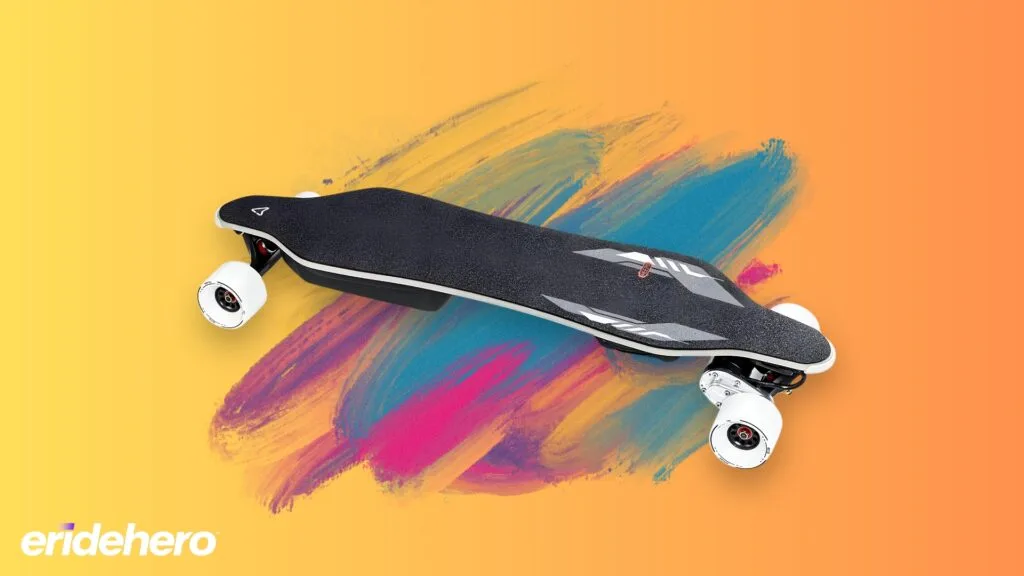
What I like
- Gear drive without the flagship price, no belts to replace and quieter than belt whine
- The biggest battery in its class at 648Wh
- Free rubber 107mm wheels bundled for rough roads
- 2.1-hour charging with the included GaN charger
What I don't like
- The remote feels cheap next to the board it controls
- Stock 90mm wheels are hard, fit the bundled 107s immediately
- Meepo support is hit-or-miss and the warranty is only 6 months
Fully enclosed gear drives used to belong on $1500+ boards. But the Voyager X brings it to riders for under $1,000 and pairs it with the largest battery in its class, which is why it’s an absolute anchor in the mid-range category.
The Voyager X has its drivetrain sealed in an aluminum box. There’s nothing that can snap or lose tension. This saves you the hassle of buying spare belts and worrying about pebbles and debris. It just runs.
Thanks to the 648Wh 12S3P battery pack, we clocked 30 miles of GPS-verified range. Top speed landed at 34 MPH with no voltage sag, as expected. The included 300W GaN fast charger takes it from 0 to 80% in about 45 minutes, which is absurd for a pack this size.
The 2800W dual motors pull violently hard, and the LingYi ESC has an exponential throttle curve that keeps delivering more and more power. It’s by no means a beginner board, and in any case I recommend starting in the lower modes to get comfortable with it before progressing.
Swap the stock 90mm wheels for the bundled 107mm Cyclone wheels immediately. They soak up rough asphalt way better, partly because the bamboo/fiberglass deck is relatively stiff due to the battery enclosure.
Meepo support is known to be hit-or-miss, and it’s a bummer we only get a 6-month warranty on a board at this price. But nothing else gives you a gear drive, 648Wh battery, and this much power at its price.
Best Performance Electric Skateboards
Acedeck Nomad N1 (Belt)
Best performance for money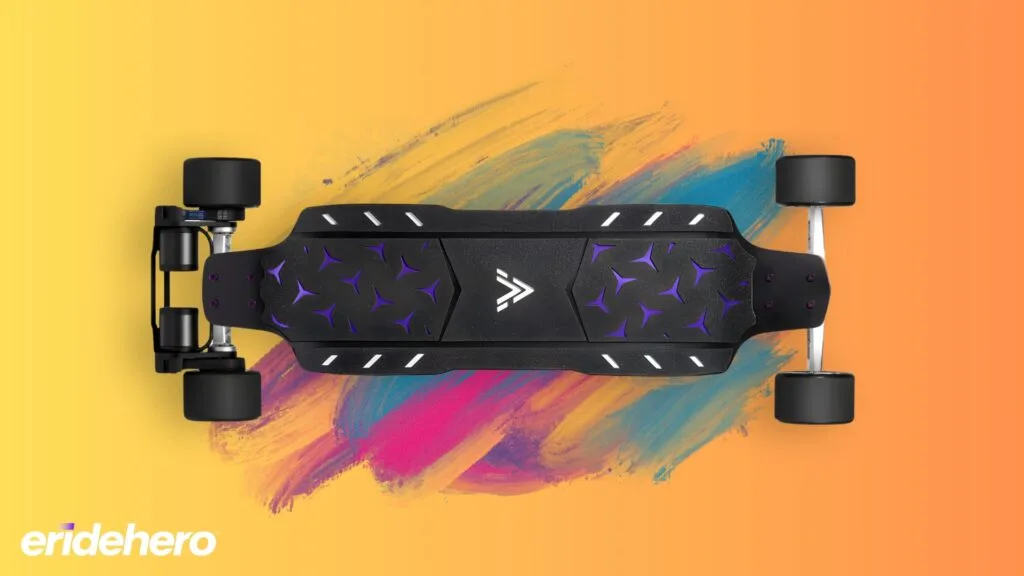
What I like
- Huge 14S4P 1,036Wh battery, unmatchable at this price
- Monstrous dual 3,500W motors capable of 40 mph
- CNC-machined trucks, mounts, and hubs
- Split-angle deck with excellent grip and carvability
- Available as belt, gear and all-terrain configs
What I don't like
- Super heavy at 36 lbs
- Early batch had issues, so buy fresh
The Nomad N1 is insanely good value. No other performance board packs specs like these in at this price. The 14S4P 1,036Wh battery delivered about 33 miles in our tests, and the dual 3,500W motors push it all the way up to 40 mph.
It’s also super comfortable to ride. The deck borrows its split-angle style from downhill racing, with a steeper nose for steering and a mellower tail that anchors your back foot, so stability at speed is superior to anything else in this segment. The deck itself is fairly stiff, but the DKP trucks are very carvey and responsive, and the large wheels soak up a good bit of the road.
Build quality matches the specs. The trucks, motor mounts, and hubs are CNC-machined, and the axles are stainless steel, so it’s built to take a beating. Of course, that also makes it a heavy ride at 36 lbs. This is a board you ride out your front door, not one you carry around.
It’s available in belt, gear, and 2-in-1 all-terrain configurations, so the same platform covers everything from street carving to trail riding.
Acedeck’s support is fairly strong, and the resolution rate seems good, but warranty logistics are known to be a bit slow. An early batch also had ESC issues that have since been resolved, so just make sure you’re buying current stock.
Backfire Zealot X2
Most refined longboard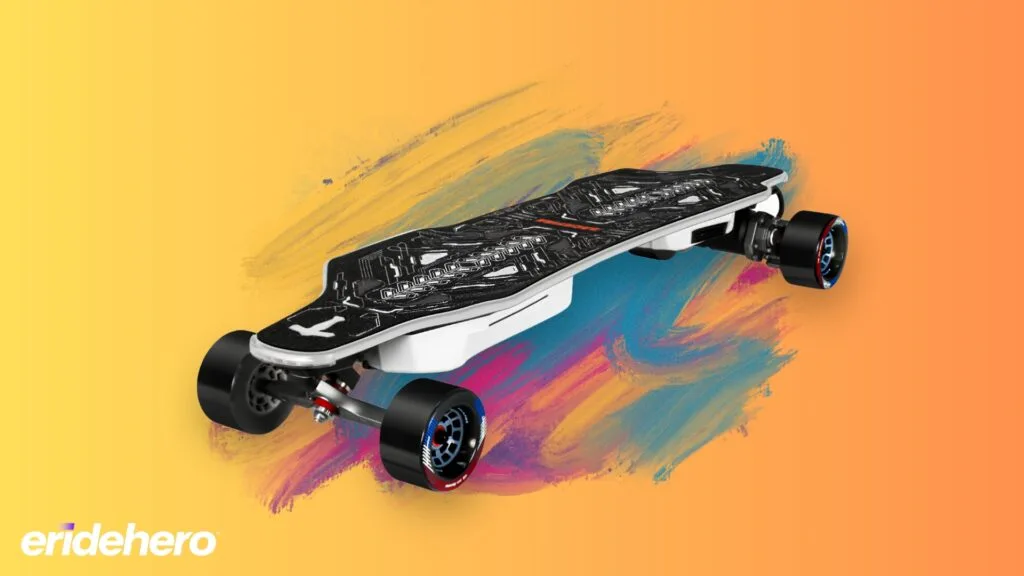
What I like
- Sealed gear drive that's much quieter than the Voyager X
- IP65 weatherproofing, perfect for rain commutes
- Best remote in the industry, a CNC aluminum AMOLED touchscreen
- Snowboard-style flex deck with ABS edges that soaks up vibration
- Integrated RGB lighting molded into the bumper strip, no app needed
What I don't like
- You pay a premium for the build vs boards with more range and power
- 31 mph top speed not impressive at the price
- Backfire uses proprietary wheel hubs, which limits swap options
Backfire is one of the oldest brands in the business, and it shows in the boards they build. The Zealot X2 is expertly made through and through, and without a shadow of a doubt the most polished board at this price.
Spec for spec, it doesn’t quite match the models above, but what the X2 does right goes beyond the numbers. The first Zealot X got slack because the deck was too stiff, so Backfire redid it completely for the X2, and the result is as close to perfect as I’ve seen at this price point. It’s built like a snowboard, with a flexible maple core wrapped in fiberglass and ABS edges. It absorbs the road really well, and the sidewalls protect the layers from splitting.
The 14S gear drive is sealed and much quieter than the Voyager X. Add the IP65 rating (best in this category), and you’ve got a board that’s perfect for all-weather commuting.
The Major V3 remote is the best in the industry, in my opinion. It has a 1.43-inch AMOLED touchscreen that’s easy to read even in direct sun, and you can adjust everything directly on it without messing around with an app. That includes the RGB lights, which are molded into a transparent strip around the deck edge. It looks great and makes you visible from all angles at night.
Performance-wise, this isn’t the best value per dollar. The 504Wh battery delivered 23 miles per charge in testing, and the 31 mph top speed is okay but not great. It’s still strong enough for 20% hills, though. If you want a beautifully teched-up board that’ll still run great in five years, this is the one.
Best All-Terrain Electric Skateboard
Acedeck Nyx Z3
Best mountainboard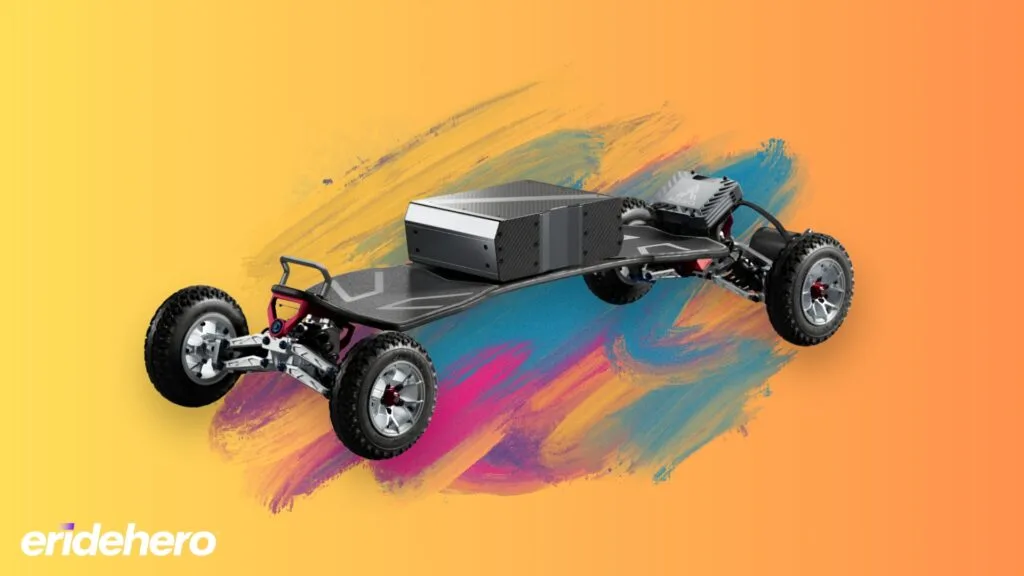
What I like
- 4-wheel suspension, road vibration simply disappears
- Top-mounted battery box, impossible to scrape on rocks and logs
- Dual 5,000W in-house motors with 65Nm of torque, no hill is too steep
- The quietest sealed steel gear drive out there
- Battery options up to a massive 1,554Wh
What I don't like
- Lots of moving parts, so check and tighten hardware regularly
- Heavy at 44.5 lbs
- Too wide and clumsy for tight city riding
The Nyx Z3 is arguably the first board to make real suspension affordable. Each wheel sits on its own suspension leg with a coil-over shock, so hitting a rock or root with one wheel doesn’t tilt the deck or throw off your balance. You feel the difference within the first hundred yards on a rough trail. Comparable suspension boards from Propel and Ecomobl cost several hundred dollars more, and unlike their stiff a-arm systems, the Z3 keeps the leaning, carving feel of an actual skateboard.
The battery box is mounted on top of the deck, so you physically can’t scrape it on rocks or logs. Battery options range from 1,036Wh to a 1,554Wh Elite pack, which Acedeck rates at 59 miles. The popular 1,036Wh Sport config got us just shy of 26 miles.
The drivetrain is super impressive. Acedeck builds its own motors, and the dual 5,000W units deliver 65 Nm of torque through a sealed steel gear drive that’s surprisingly quiet for straight-cut gears.
As with any full suspension board, there are lots of moving parts and small screws, so expect maintenance down the line. When you ride off-road, things rattle a lot more, so make a habit of tightening everything on a regular basis (or add threadlocker).
All in all, the ultimate mountain board under $2,000. Nothing comes close. If you want a more rigid all-terrain setup, look at the Nomad N1 AT config above instead.
Specs that matter (and ones that don’t)
Spec sheets are half truth and half marketing. Some specs matter, while others are lingo or inflated to look competitive.
Watt-hours beat claimed range
Claimed range is notoriously the most inconsistent metric. Brands can say whatever they want, there’s no consistency between brands, and it’s often done in some kind of unrealistic lab setup that doesn’t translate to the real world.
Look at the watt-hours instead. That’s how much energy the battery actually stores.
A rough rule of thumb: Divide Wh by 20, and you’ll get a realistic estimate of range in miles at regular commuting pace.
Example: A 216 Wh board gets about 10 miles.
There are exceptions (some boards are lighter and/or more efficient than others), but it generally holds pretty well.
Range estimator
Estimate real-world range from battery size and load.
A ballpark from our tested "~Wh ÷ 20" rule at a steady cruising pace. Weights are optional and default to a 175 lb rider on a 20 lb board.
Hub, belt, or gear drive
Hub motors are cheap, quiet, and maintenance-free, but they ride quite harshly because they’re generally covered only by thin urethane sleeves (though many boards let you swap in Cloudwheels, etc).
Belts add more torque and speed. They also let you swap wheels freely, but the belts wear out every few hundred miles or so.
Gear drives are the more expensive premium option. They deliver belt-level torque, are sealed, and have great longevity. You’ll find them on boards like the Voyager X and Zealot X2.
All three have their place. There’s no single best drivetrain here, mostly because the price points are so different. Hubs for budget boards, belts for mid-range boards, and gears for high-performance boards.
Battery voltage is crucial for performance
Battery voltage makes a huge difference in performance and ride feel.
The higher the voltage, the more power can be delivered to the motors at once. 14S systems are punchier and hold their performance at low battery, whereas 10S boards usually fade below 50%.
The good news is that 12S and 14S systems keep getting cheaper. A few years back you’d only find 14S on high-performance models, but today you’ll find them on mid-range boards below $1K. If you plan to ride steep hills, 12S is the minimum.
Weight matters for portability
A lot of people never consider the board’s weight, but it clearly matters as more and more brands add carrying handles. If you plan to integrate with public transport or carry your board up to the 3rd floor several times a day, weight is gonna matter a lot. Below 20 lbs is super easy to carry, but boards above 30 lbs quickly get awkward to move around.
The brand matters as much as the board
All the boards in this guide come from direct-to-consumer brands, where only the maker carries replacement parts. That makes after-sales support super important, so we’ve done our best to distill the community’s experience.
Tynee, Backfire, and WowGo generally have a really strong reputation for standing behind their boards. Meepo, Acedeck, and the younger brands are more variable. Although the hardware might be brilliant, support is known to be slower or spottier.
If you want to do some self-research and dive deeper, you can explore our electric skateboard database with hundreds of models.