
We earn commissions from links on our site, enabling us to deliver independent reviews. See our editorial policy.
E-bikes are booming, and that’s good news for us. More options and more competition means better products at lower prices. But with hundreds of models on the market, where do you even start?
Since starting ERideHero in 2019, I’ve tested 120+ electric rides across more than 12,000 miles. I’ve ridden plenty of great models, but even more that haven’t been worth the money. Below is my shortlist for the top 7 ebikes I think are worth it in 2026.
Picks range from $1,300 to $4,500. Some come from the biggest names in cycling, others from direct-to-consumer brands that punch well above their price. Every bike earns its place for specific reasons I’ll break down below.
Best Premium Commuters
Specialized Turbo Vado 3 EVO 4.0
Most refined performance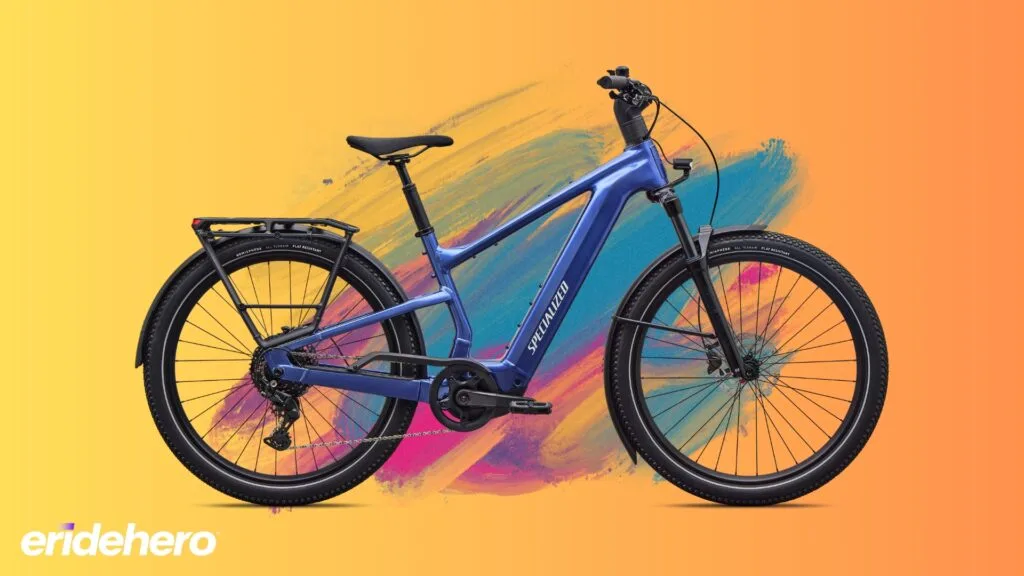
What I like
- The new 3.1 motor (most torque of any commuter ebike right now)
- Genuinely capable off-road for a premium city bike
- MasterMind app ties tuning, anti-theft, and updates together
- Worldwide Specialized dealer network
What I don't like
- Expensive
- Heavy at 62.8 lbs
- Motor harder to service outside Specialized dealers
Arguably the most polished commuter ebike you can buy in 2026 if money isn’t a problem. Extremely high-quality components end to end and a new motor that pulls you to 15.5 MPH in 3 seconds.
The 3.1 motor is the headline. Specialized brought motor production in-house this year, ditching Brose for a unit they designed and built themselves. 105 Nm of torque and 810W of peak power put it at the top of the commuter class, but the bigger story is that Specialized now controls the whole drivetrain rather than relabeling someone else’s hardware. Few brands have the resources to do that.
Capable of light off-roading thanks to a proper suspension fork, a cushioned seatpost, and chunky all-terrain tires, which makes this the most versatile of the premium picks here. The standard Vado 3 with narrower urban tires exists if you don’t want the off-road bias, but for most riders the EVO trim is the smarter buy because it does both jobs without compromise.
The MasterMind app handles motor tuning and anti-theft, with OTA updates that add new features over time. An optional 280Wh range extender bottle adds another 25 miles to the claimed range.
Specialized’s worldwide dealer network also makes servicing it genuinely easy, which matters more than spec sheets when you’ve owned a bike for five years.
Trek Charter+ 4S
Most reliable Class 3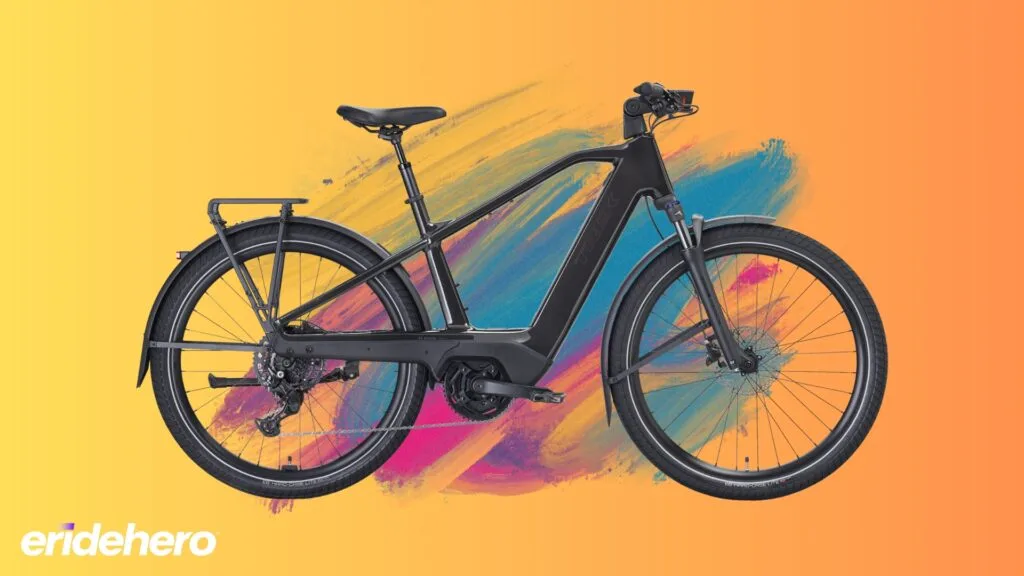
What I like
- Arguably the most service friendly commuter on the market
- Trek's dealer network is everywhere
- Really good app for navigation and anti-theft
- 4S vs 5S trim choice gives some budget flexibility
What I don't like
- 5 lbs heavier than the Vado at roughly the same price
- Down on every spec compared to the Vado
- Not built for off-road
A purer city bike than the Vado. The Charter+ is a proven Class 3 commuter built on Bosch’s mid-drive platform, which has powered Trek ebikes for over a decade.
The 4S is the entry of the Charter+ line. The 5S costs $500 more for nicer brakes and drivetrain, but the motor and battery are identical between the two, so the 4S is the smart pick unless you specifically want the upgraded components.
Bosch Performance Line Sport drives this bike, paired with Trek’s Smart System and the Trek Central app for anti-theft, navigation, and OTA updates. The bigger reason to pick Bosch is the service network. Walk into a decent bike shop in the US or Europe and they’ll know how to handle a Bosch motor. That’s not as true for newer in-house systems like Specialized’s 3.1, which is harder to service if your local shop doesn’t carry Specialized.
It can’t match the Vado spec-for-spec, but if your commute is paved and you don’t need all-terrain tires, half of what the Vado offers is wasted on you. The Charter+ also weighs about 5 lbs more than the Vado, so this isn’t the bike to pick if you carry it up apartment stairs daily. But for the rider who wants the most serviceable Class 3 ebike from a brand that’s been doing this longer than most, the Charter+ is the safe answer.
Canyon Precede:ON Comfort 5
Best value premium commuter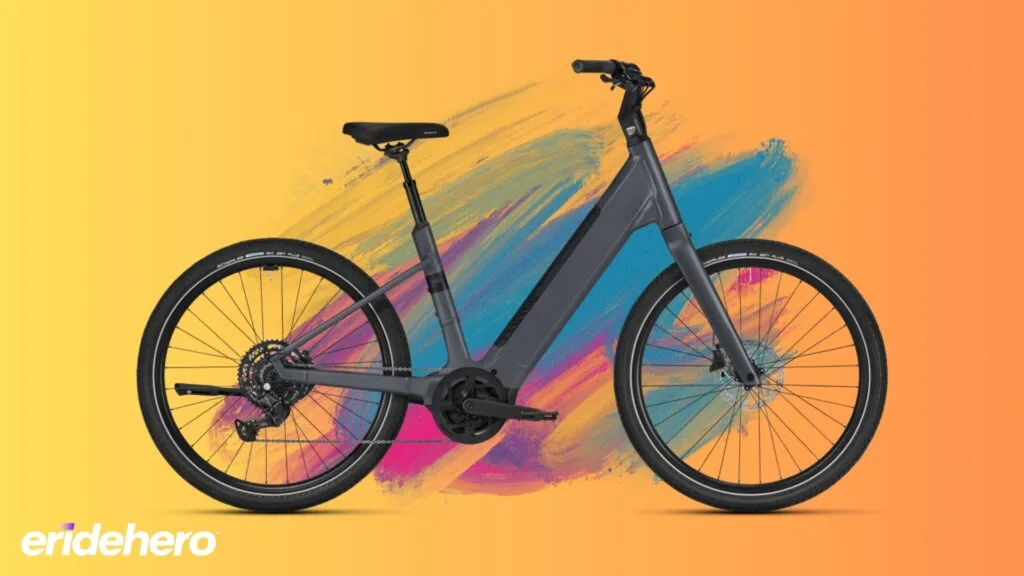
What I like
- Bosch Class 3 motor at noticeably less than Trek or Specialized
- Lightweight for the specs
- Super sleek, streamlined design
- Canyon has been refining DTC longer than most brands have made ebikes
What I don't like
- No local dealers
- Charging is slow (around 6 hours for a full battery)
- Lower torque (63 Nm) than Trek or Vado above
The cheapest way into a real Class 3 Bosch commuter from a name brand. Notably cheaper than the Trek Charter+ for very similar specs. Ultra sleek design with proven components from front to rear.
The difference with Canyon is that they have no dealer network. Trek and Specialized run thousands of dealers globally whereas Canyon ships direct from the factory to keep prices down. This means local service is more difficult, should you need it. You’re trading the dealer network for the savings, which is fine if you’re comfortable with mail-order bikes and don’t mind handling minor servicing yourself.
Canyon has been doing DTC longer than most other premium brands, though. The Precede:ON arrives roughly 95% assembled with a torque key in the box, and most owners have it riding in under an hour. Fenders, rear rack, integrated lighting, and a kickstand all come standard, which is rare at this price point.
One frame fits riders from 5’3″ to 6’5″, and the cushioned seatpost plus wide tires handle rough city streets without needing a suspension fork up front.
One thing to be aware of: charging is slow at around 6 hours for a full battery, which a few owner reviews have flagged as a minor annoyance. For a daily commuter that gets plugged in overnight it doesn’t matter, but you can’t top it up quickly between rides.
We test every ride
Independent reviews, buying advice and the real test data behind them. Straight to your inbox.
Join 2,000+ riders


Best Value Picks
Segway Myon
Smartest tech under $2k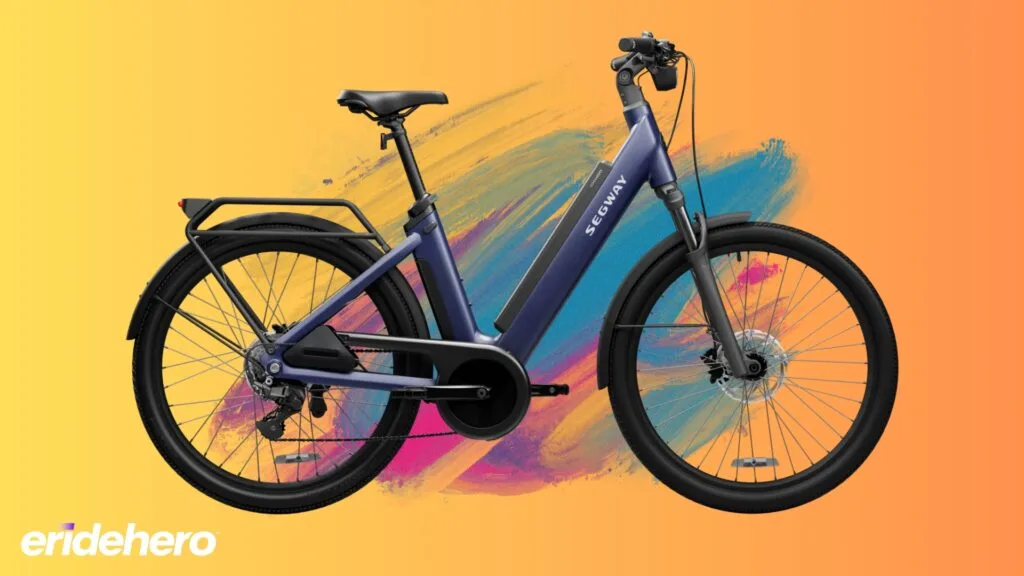
What I like
- AirLock, Apple Find My, and Lost Mode
- Class 1, 2, or 3 switch (most Class 3 ebikes lock you to one mode)
- Throttle + pedal assist
- Electronic shifting and dropper post are rare at this price
What I don't like
- Hub motor feels less integrated with pedaling than mid-drives
- Heavy at 72.8 lbs
- Service network can't match Trek or Specialized
All the smart features of the premium picks at well under their price. The Myon is what happens when a tech company builds an ebike rather than a bike company adding tech.
The software is what makes the Myon special. AirLock unlocks the bike when your phone’s nearby and locks it again when you walk off. Find My puts it on the same map as your AirPods. Lost Mode kills the motor remotely if the bike gets stolen. Segway also pushes OTA updates, so the feature set keeps growing. The bars even have built-in turn signals, which is rare on ebikes but an obvious safety win they clearly borrowed from the e-scooter market.
Class 1, 2, or 3 selectable is the other thing the premium picks can’t match. The Vado and Trek are 28 MPH or nothing, while the Myon lets you toggle: Class 1 for multi-use trails, Class 3 for full 28 MPH commuting. There’s also a throttle up to 20 MPH, which neither premium pick offers. Electronic shifting and a dropper post on top of all that is unusual at this price.
It’s a hub motor, not a mid-drive like the Trek and Vado above. Mid-drives read your effort through a torque sensor and route power through the bike’s gears, so they feel like an extension of your legs. Hub motors just push, regardless of how hard you’re pedaling.
The Myon has plenty of grunt for city hills, it just won’t feel as integrated. Don’t worry about the brand though. Segway-Ninebot builds the fleet ebikes on Bolt and other rental platforms, where bikes get hammered daily with barely any maintenance. The hardware is proven in conditions harsher than any single owner will replicate. If you’ve ridden a Bosch mid-drive before, you’ll feel the difference. If you haven’t, you won’t miss it.
Gotrax Mustang
Best moped style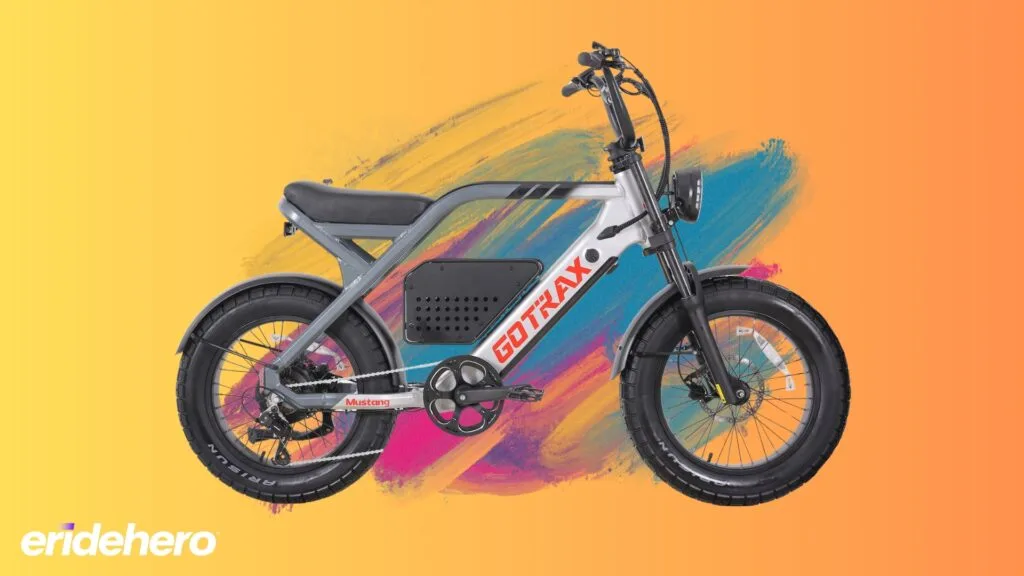
What I like
- Moto-styled frame and 4-inch fat tires for real street presence
- 90 Nm of torque is strong for the price
- Tektro hydraulic brakes and LG battery cells, rare at this tier
- 86-mile claimed range, top of its class
What I don't like
- Heavy at 76.6 lbs, not a bike to carry upstairs
- 264 lb weight limit, lowest in this guide
- No app or connectivity, just a basic LCD
The most fun-looking ebike in this guide and easily the best moped-style pick under $1,500. The Mustang trades the smart features and mid-drive refinement of the picks above for real components and serious style at a fraction of the price.
Two things sub-$1,500 ebikes usually skimp on are battery cells and brakes. The Mustang has Tektro hydraulics and LG cells, so neither corner gets cut. 90 Nm of torque from a 720Wh pack is genuinely strong at this price. The 86-mile range claim is optimistic like every ebike’s range claim, but you’ve still got more battery to work with than almost anything in this class.
The look is the whole pitch. Moto-styled aluminum frame, 4-inch fat tires, integrated rear lights, and a low step-through stance give it the “actually looks fast standing still” vibe. None of the premium picks above pull off this aesthetic. If you’ve ever wanted a moped without paying for one (or dealing with insurance and registration), the Mustang is the closest you’ll get on an ebike.
There’s no app or connected features, just a basic LCD display. And the 264 lb weight limit is the lowest in this guide, so larger riders should look at the Tundra or one of the premium picks instead.
Best Utility & Terrain
Lectric XPedition2 Dual
Best value cargo bike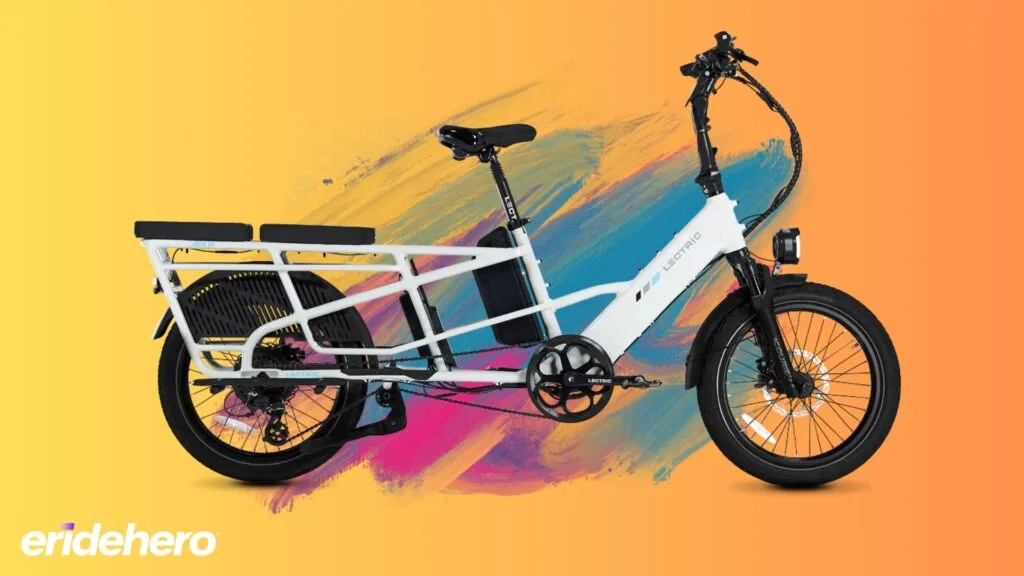
What I like
- Dual 624 Wh batteries, 120 miles claimed range
- 450 lb total payload, 300 lb on the rack (most in this guide)
- PWR programming scales assist with cargo weight
- Turn signals and integrated lights standard, UL 2849 + UL 2271 certified
What I don't like
- 83 lbs, heaviest pick in this guide
- Rear hub motor doesn't climb steep hills under load like a mid-drive
- Step-over only and one size
The most capable cargo bike under $2,000, full stop. The XPedition 2 Dual hauls 450 lbs and runs on dual batteries for a claimed 120 miles of range. It costs less than half what a Tern GSD or Trek Fetch+ does. This is the obvious answer for families looking to replace a second car.
Two 624 Wh batteries combine for 1,248 Wh, the largest pack in this guide and more than double what most cargo ebikes carry. Cut the 120-mile range claim in half (range claims are always optimistic) and you’ve still got a week of school runs and grocery hauls between charges.
The 300 lb rack capacity is the line between a serious cargo bike and a heavy commuter pretending to be one. Two kids on a child seat setup. A week of groceries plus a pet. A full bike-camping load. The frame handles all of it without flex. Turn signals and integrated lights are standard. The bigger deal is Lectric’s PWR programming, which scales assist with how much you’re carrying rather than giving you the same power whether you’re empty or hauling 200 lbs of kid.
At 83 lbs, this is the heaviest pick in the guide. Fine for a cargo bike but it means you really need to commit to using it as one. The rear hub motor handles flat and rolling terrain well, though a mid-drive cargo bike from Tern or Trek will climb steep hills under heavy load noticeably better. The 20-inch wheels keep the center of gravity low (good for cargo) but the ride feels less smooth than the 27.5 or 29-inch wheels on the premium picks above.
Gotrax Tundra
Best torque-sensor fat-tire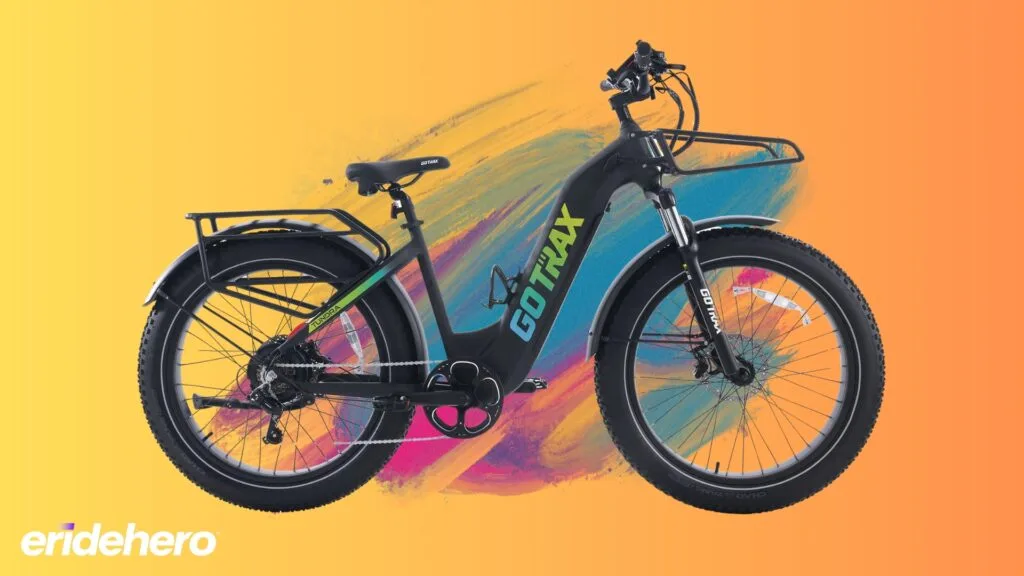
What I like
- Torque sensor is super rare at this price
- UL 2849 + UL 2271 certifications (most brands skip these at this price)
- Step-through and step-over frames both available
- 78 lbs, the lighter of the two fat-tire picks here
What I don't like
- Shimano Tourney is the lowest-tier derailleur Shimano makes
- No rear suspension (the Lacros Thunder below has one)
- Chaoyang tires are middle-tier
A torque sensor on a fat-tire ebike under $1,500 is rare. Most bikes at this price use cadence sensors that engage like an on-off switch. The Tundra’s torque sensor reads how hard you push the pedals and scales motor output to match. It feels much more natural and bike-like, and that’s the main reason to pick the Tundra over the Thunder below.
UL certifications are the other thing brands skip at this price. UL 2849 covers electrical safety, UL 2271 covers the battery. Both are required to register an ebike in cities like New York, and they confirm the bike has been fire-tested.
The 960Wh Bafang setup gives you a claimed 75 miles. Expect 35 to 55 in real-world riding depending on assist level and terrain. Class 3 capability at 28 MPH on pavement is rare for a fat-tire and means it doesn’t feel sluggish on your weekday commute. The 26 x 4-inch tires float over loose sand and packed snow that would stop a regular commuter ebike cold. Both step-over and step-through frames are available, which is also rare in this category.
Shimano Tourney is the lowest-tier derailleur Shimano makes, and it ages faster than the rest of the bike. The Chaoyang tires are fine but middle-tier. At 78 lbs, a hitch-mounted rack with a high weight rating is a smart pairing for getting it to the trailhead.
If you want full suspension and a 400 lb payload at the same price, the Lacros Thunder below is the alternative. The tradeoff is a cadence sensor and an extra 5 lbs. For most riders who do more pavement than dirt, the Tundra is the smarter call.
Lacros Thunder
Best full-suspension fat-tire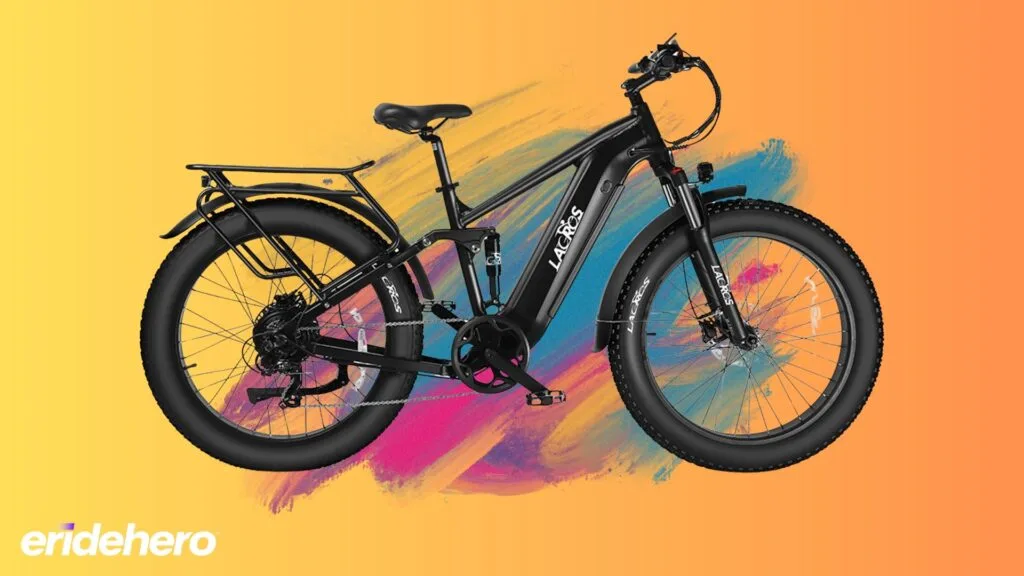
What I like
- Full suspension (rear coil is rare at this price)
- 400 lb payload, perfect for heavy riders
- Throttle up to 28 MPH (the Tundra throttle caps at 20)
- Cadence sensor that's tuned really well
What I don't like
- 83 lbs, on the heavy end for fat-tires
- Cadence sensor instead of torque
The Thunder shares most of the Tundra’s spec sheet. Same $1,299 price, same 960Wh battery, same 750W motor and 80 Nm torque. The difference is tuning. Full suspension and a higher payload push it toward more serious off-road duty.
A 100mm coil/oil front fork with adjustable preload and hydraulic lockout pairs with a fixed rear coil shock. Rear coil shocks are rare under $2,000, and this one stays composed under pedaling instead of bobbing through every stroke like most budget coils. The 180mm hydraulic rotors front and rear give you the stopping power a heavy Class 3 bike needs. Segment standard is 160mm.
On my 18% benchmark hill, the Thunder pulled steadily up without any audible strain. Most 80 Nm hub motors slow down or whine on that pitch. Climbing felt as strong as anything I’ve ridden in this segment. The 400 lb payload is also unusual at $1,299, beaten only by the XPedition cargo bike above. Heavier riders won’t run into any limits here.
Sensor feel is where the Tundra still has the edge. Its torque sensor measures how hard you pedal and modulates assist accordingly. The Thunder’s cadence implementation is one of the best I’ve ridden, but a torque sensor will still feel more natural to most riders.
Specs that matter (and ones that don’t)
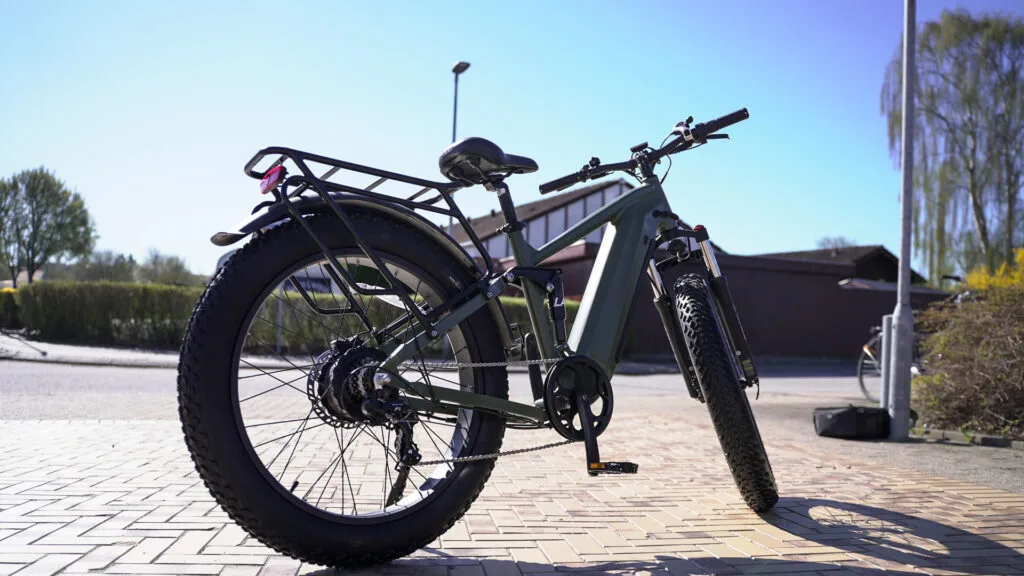
When shopping for ebikes, don’t get caught up in spec sheets, like which model has the most watts.
Look at watt-hours instead of max range
Brands often overinflate claimed range to look more competitive. They test in lab-like conditions with light riders, eco mode, flat ground, mild weather, and a 100% fresh battery.
Riding in the real world is different. Based on our testing, expect 40-60% of the claim from normal commuting-style riding.
If you wanna compare battery performance across models, look at Watt-hours (Wh) instead. This tells you how much energy the battery can actually store. The average energy consumption across all our ebike tests is roughly 13 Wh per mile.
Nominal watts matter more than peak watts
Entry-level brands often lead with peak wattage to make their motors sound more powerful than they really are. A “1500W motor” sounds tougher than a “750W motor,” but in plenty of cases it’s literally the same motor with different numbers on the spec sheet.
The two are different things. Peak is what the motor pulls for a few seconds under max strain. Nominal is what it can sustain over time. The federal Class 1-3 limit in the US is 750W nominal, so any legal ebike sold here is technically a 750W bike, no matter what the marketing says.
Also, look at the battery voltage. A 48V 500W motor will feel stronger than a 36V 500W motor, especially on hills. The higher voltage means less sag under load and overall stronger power delivery to the motor.
Torque matters more than wattage
Brands love quoting wattage because it’s a bigger number. The spec that actually matters on hills is torque. We’ve tested 750W ebikes with 60Nm of torque that struggle on climbs a 500W ebike with 90Nm walks up fine.
For flat commuting, 60 Nm is plenty. For cargo, real hills, or carrying a passenger, look for 80 Nm or more. If the spec sheet skips the torque figure, assume it’s not great.
Component from the same brand come in different tiers
Brands often list components without specifying the tier because vague specs let them use cheaper parts. “Shimano gears” or “hydraulic brakes” without context tells you nothing.
Shimano, for instance, has several classes, ranging from entry-level Tourney to high-end XTR. The gap in quality and price is huge. The same goes for hydraulic brakes, where Tektro is the budget option, and Magura is ultra-premium.
If you wanna know what you’re actually getting, look for the specific model name in the spec sheet, something like “Shimano Deore” or “Tektro HD-E350.” When that detail is missing, assume it’s the cheapest version they could put on.
Look for a torque sensor, not just a strong motor
The sensor type is often hidden in spec sheets, but it makes a huge difference to how the bike feels to ride.
Cadence sensors are most common in cheaper hardware. They just detect that the pedals are turning and switch assist on at a fixed level, like an on-off switch.
Torque sensors measure how hard you pedal and modulate assistance accordingly. They feel more dynamic and more integrated with your tread. It’s simply a smoother overall riding experience.
Most premium ebikes ship with torque sensors. Cadence sensors are usually a cost-saving move on cheaper hub-motor builds. Cadence sensors aren’t necessarily bad or something you should avoid; just know that they won’t feel as integrated or refined to ride.