
We earn commissions from links on our site, enabling us to deliver independent reviews. See our editorial policy.
Quick take
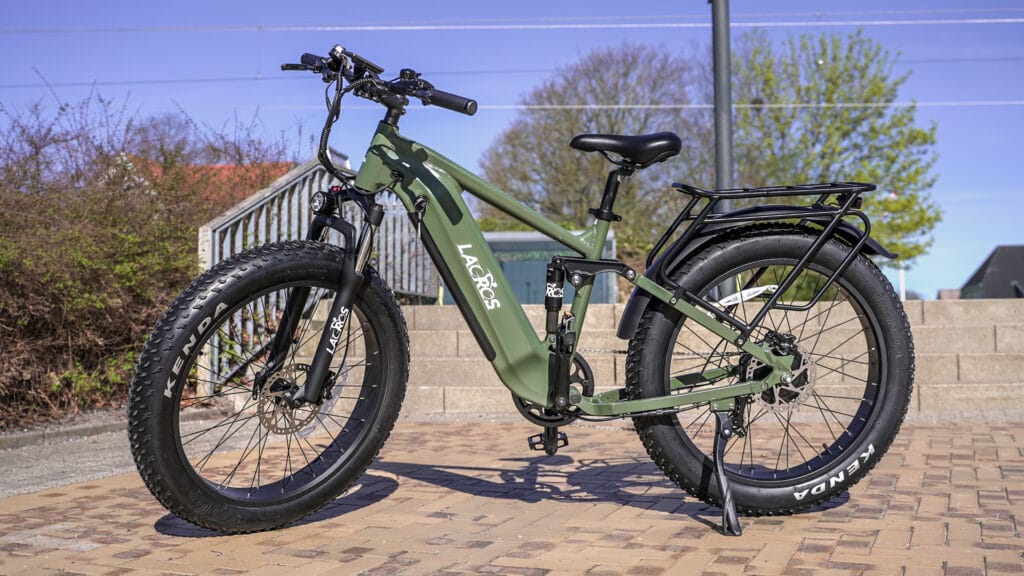
The Lacros Thunder is a lot of ebike for the money. It packs a big 960Wh battery, a strong motor, full suspension, and reliable hydraulic brakes. It climbs steep hills with ease, and the cadence sensor is tuned really well. It's (obviously) heavy at 83 lbs, and the rear shock has no adjustment, but I struggled to find much else to complain about.
What I like
- Strong, smooth motor with effortless climbing on steep hills
- Massive 960Wh Samsung battery for genuine all-day range
- Adjustable front fork with preload and a firm lockout
- Hydraulic 180mm brakes front and rear
- Excellent traction on loose gravel and forest trails
- Good ergonomics for long rides
- 400 lb payload and fits riders 5’3" to 6’3"
- Smooth, predictable throttle and PAS delivery
What I don't like
- Heavy at 83 lbs, not a bike you'll be lifting often
- Cadence sensor instead of torque (well-tuned, but still cadence)
- No rear shock adjustment
- Slow 2A charger (7-9 hours for a full charge)
Where to buy
 Lacros Thunder

Tested performance
- Top speed
- 28 mph
- Range
- Lowest PAS
- 62.4 mi
- Mid PAS
- 53.7 mi
- Highest PAS
- 45.1 mi
- Throttle only
- 31.2 mi
- Acceleration
- 0–15 mph
- 4.8 sec
- 0–20 mph
- 7.6 sec
- 0–25 mph
- 11.5 sec
- Braking
- 15–0 mph
- 13.1 ft
- 20–0 mph
- 18.4 ft
The Lacros Thunder is a fat-tire ebike that promises a lot for the money. Full suspension, hydraulic brakes, a 960Wh Samsung battery, and a 750W motor at a price that undercuts most of the segment. On paper, it’s hard to find anything missing.
But spec sheets only tell you so much. I put 270 miles on the Thunder around Aalborg to see how it actually rides. Roads, hills, gravel paths, forest trails. Here’s what I found.
Speed and Motor Performance
The Thunder runs a 750W rear hub (1400W peak) on a 48V system, with 80 Nm of torque. The numbers are competitive, but the way Lacros has tuned the controller is what makes this bike stand out.
Top speed test
I clocked a strong top speed of 28 MPH in PAS 5 with throttle assist, GPS-verified. That’s the Class 3 ceiling and what you’d expect from an unlocked 48V/750W system.
| Model | Top speed | Motor |
|---|---|---|
| Lacros Thunder | 28 mph | 750W rear hub, 80 Nm |
| Aventon Aventure 2 | 28 mph | 750W rear hub, 75 Nm |
| Lectric XPeak 2.0 | 28 mph | 750W rear hub, 85 Nm |
| Heybike Brawn | 28 mph | 750W rear hub, 86 Nm |
Note: A 28 mph ebike is legal in most US states as a Class 3 e-bike, but in Europe (including Denmark, where I’m based), anything over 25 km/h requires specific permission. Always check your local laws.
Acceleration
The Thunder pulls strong when you want it to, but it’s easy to dial back through the PAS settings or by easing off the throttle.
| Interval | Average | Best |
|---|---|---|
| 0 to 15 mph | 4.8 s | 4.5 s |
| 0 to 20 mph | 7.6 s | 7.4 s |
| 0-25 mph | 11.5 s | 11.0 s |
| 0 to 28 mph | 15.4 s | 14.9 s |
The motor is usually where you feel these bikes getting cheaper, but the Thunder surprised me here. Cadence-sensor hub bikes often have a jolty pickup where you have to pedal half a crank before the motor registers. That’s not the case here.
The throttle ramps in smoothly without lurching, and the motor catches your pedaling after about a quarter rotation. Some of the best I’ve felt on a cadence sensor.
Most of my riding was in PAS 2 and 3. On steeper hills, I’d crank it up. On flat stretches, I’d drop down to PAS 1. All five assist levels felt meaningful. I’ve ridden plenty of bikes where PAS 1 through 4 feel the same and PAS 5 is a huge jump. The Thunder felt closer to a 20% bump per level, tuned really well across the board.
Hill climbing
I put the Thunder to the test on the steepest hill in my city, Aalborg, which peaks at 18%. I’ve used this as my benchmark across countless electric rides.
It pulled steadily uphill with no audible strain, no real speed drop, and clear performance headroom left over. It’s arguably the most composed climb I’ve recorded on a 48V hub-drive ebike on this hill. I have no doubt the Thunder would handle a 20%+ pitch with a heavier rider and cargo without protesting.
On paper, the Thunder’s 80 Nm rating is a bit lower than competitors at 85 to 90 Nm. That’s a small enough gap to be within measurement noise, and hub motor torque numbers are inconsistent between brands anyway. Climbing felt as strong as anything I’ve ridden in this segment.
Sensor and motor feel
The Thunder uses a “Dual Hall Integrated Speed Sensor,” which is a fancy way of saying a cadence sensor with redundant pickups. This is standard on most ebikes under $2,000.
Ebikes use one of two pedaling sensor types.
Cadence sensors detect whether you’re pedaling, on or off. Cheaper, simpler, and what you get on most budget-to-mid ebikes. Power tends to come on like a switch.
Torque sensors measure how hard you push the pedals and scale motor output proportionally. Smoother plus more bike-like, but more expensive, and rare under $2K.
So the Thunder’s cadence sensor is expected at the price. What’s not expected is how well it’s been tuned. Engagement from a stop is responsive without being jolting, the cut-out when you stop pedaling feels gradual rather than sharp, and there’s none of the hunting between PAS levels that plagues poorly-tuned cadence systems.
If you’re upgrading from a torque-sensor mid-drive, you’ll still notice the difference. But for a hub-drive cadence ebike at this price, this is one of the best implementations I’ve ridden.
We test every ride
Independent reviews, buying advice and the real test data behind them. Straight to your inbox.
Join 2,000+ riders


Range and Battery
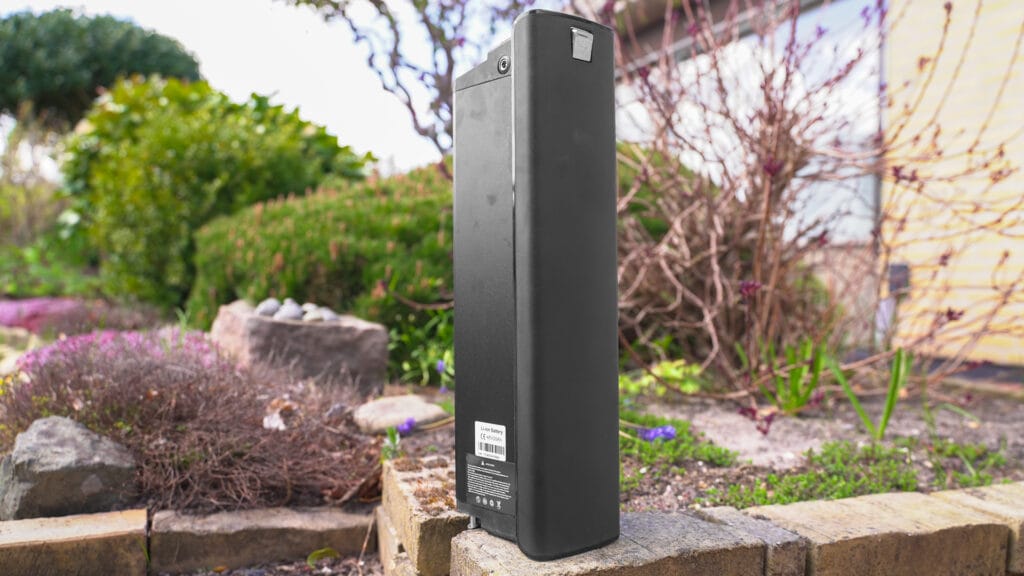
The Thunder packs a 960Wh battery (48V, 20Ah) using Samsung 21700 cells. That’s a sizable capacity for the segment and roughly 30% more than the Aventon Aventure 2’s 720Wh pack. It’s a lot of battery for the money.
Range tests
I ran four range tests at different assistance levels to see what you can realistically expect.
| Assist level | Range | Avg. speed |
|---|---|---|
| PAS 1 | 62.4 miles | 13.2 mph |
| PAS 3 | 53.7 miles | 16.8 mph |
| PAS 5 | 45.1 miles | 21.4 mph |
| Throttle only | 31.2 miles | 27.5 mph |
Lacros claims up to 90 miles, which is the kind of best-case number every ebike brand quotes. Light rider, PAS 1, flat ground, slow average speed. My PAS 1 result is more realistic and still excellent.
The PAS 3 number is the one most of you should care about. That’s where you’ll spend most of your time on a daily commute or a weekend ride, going at a normal pace with real pedal effort.
All in all, excellent long-range performance that’s really hard to beat at the price.
Charging
The bundled 2A charger takes 7 to 9 hours to refill the 960Wh pack. It’s on the slow end, but pretty standard for hub-drive ebikes in this class. I wish more brands would ship faster chargers with these massive battery models, but for now, you’ll need to do the same if you want to charge quicker.
The battery is removable, which is a must on an 83 lb bike you’re not lugging up the stairs.
Ride Quality
The Thunder is a comfortable, planted, confident bike to ride. Fat-tire ebikes generally are, but the full suspension and the way it handles loose surfaces push the Thunder a step ahead of most hardtails I’ve tested.
Suspension
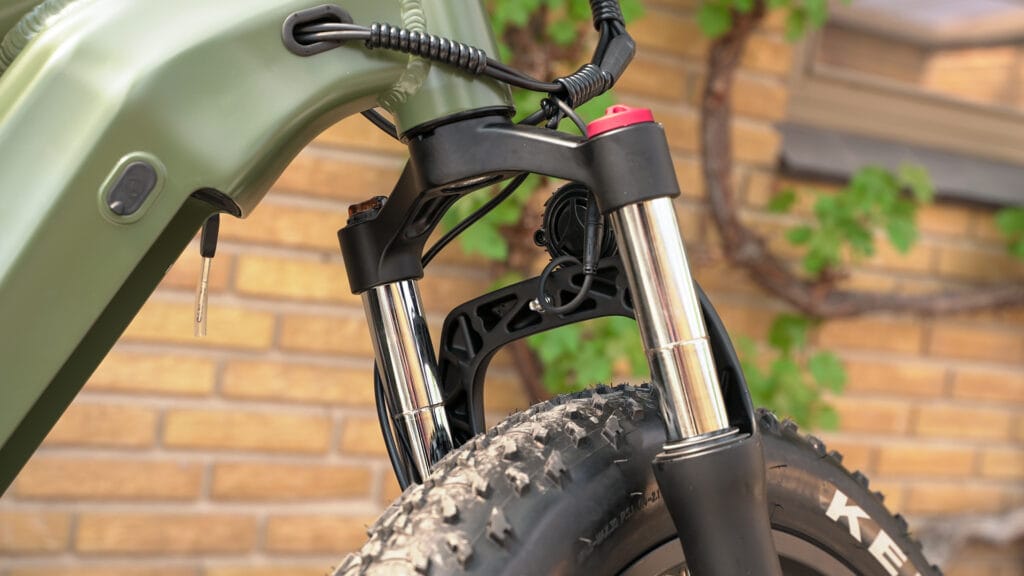
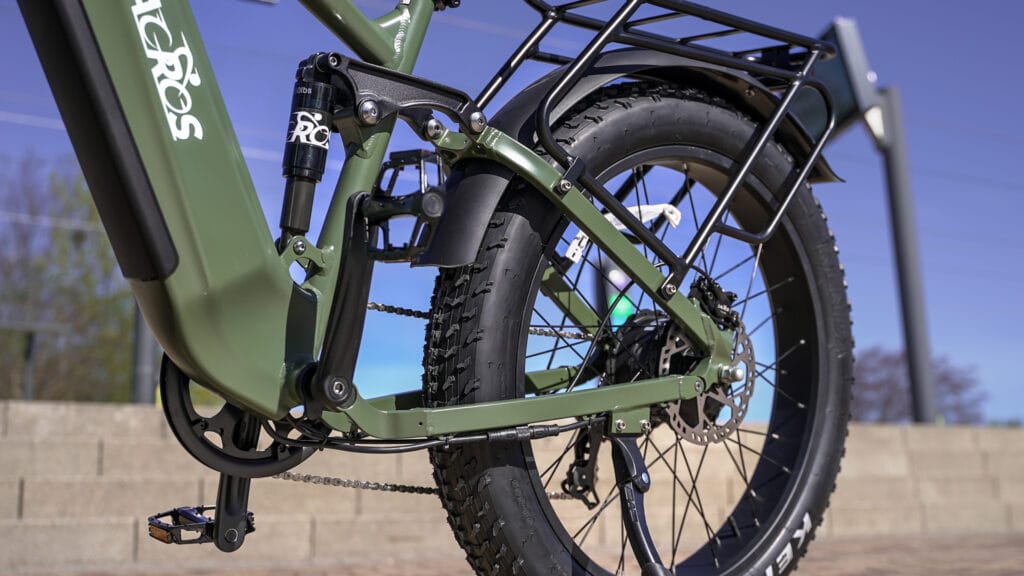
The Thunder runs a 100mm coil/oil front fork with adjustable preload and hydraulic lockout. It pairs with a fixed rear coil shock. Rear suspension definitely isn’t a given at this price point, not for e-MTBs either.
The front fork does its job well. With the lockout off, it’s plush and soaks up bumps and hits without the mushy feel some budget forks have. Flip the lockout on and it goes near-rigid like a proper fork should. The preload adjustment lets you dial it in to your weight and preferences, which is a nice touch, though I found the adjustment itself a bit fiddly to use.
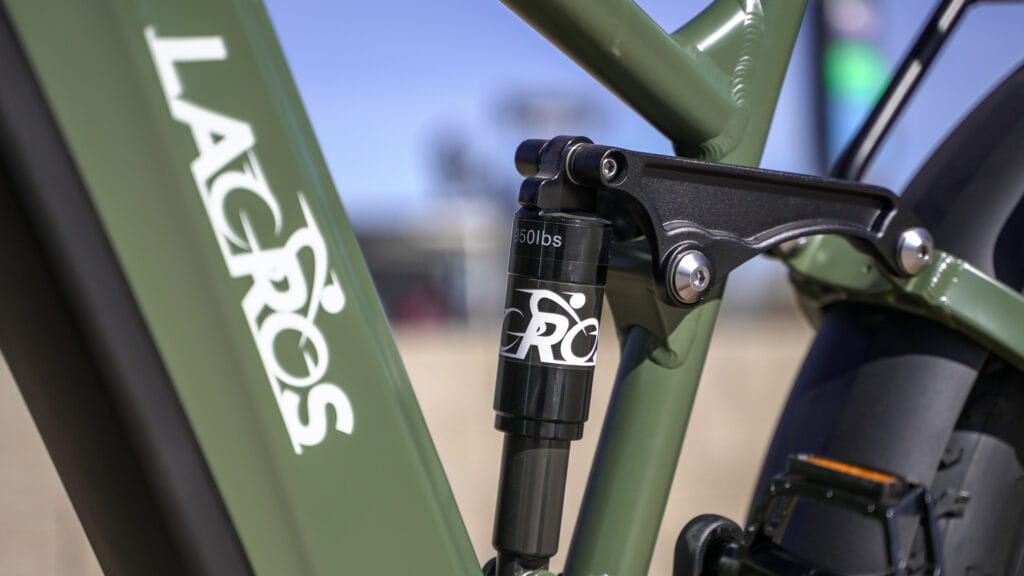
The rear coil works well, too. Budget rear coils are notorious for bobbing when you pedal and bottoming out on hits, but this one stays composed. It returns quickly, and the 950 lbs spring rate makes it firm without feeling locked-out. Obviously it’s not going to match an expensive multi-link trail bike with 150mm of travel, but it suits the fat-tire design and handles roads and trails just fine.
Tires and grip
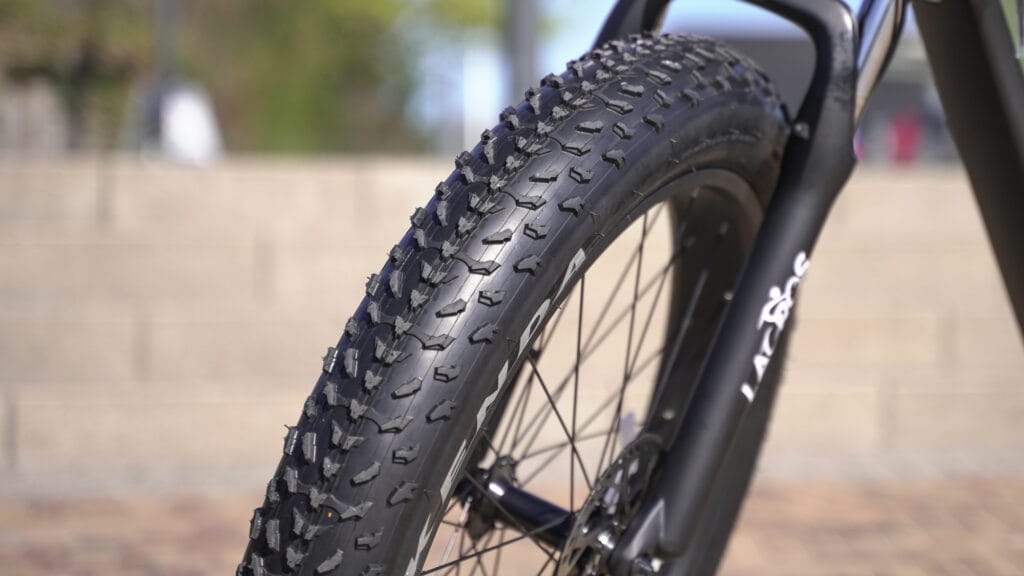
The 26” x 4” Kenda fat tires work well for the Thunder. They’re in the middle of the pack quality-wise and overall good value for money. Fat tires alone eat most small-bump chatter, but paired with the dual suspension, the Thunder feels glued to the ground.
I tested the bike on all kinds of surfaces, including regular roads, loose gravel paths, and forest trails here in Aalborg. The wide contact patch found traction everywhere, even when I banked into corners on loose gravel or rolled over big roots in the forest.
The fat tires don’t make this a real mountain bike. The geometry and weight aren’t built for that. But for trail-curious commuting and gravel exploring, it’s hard to fault.
Brakes
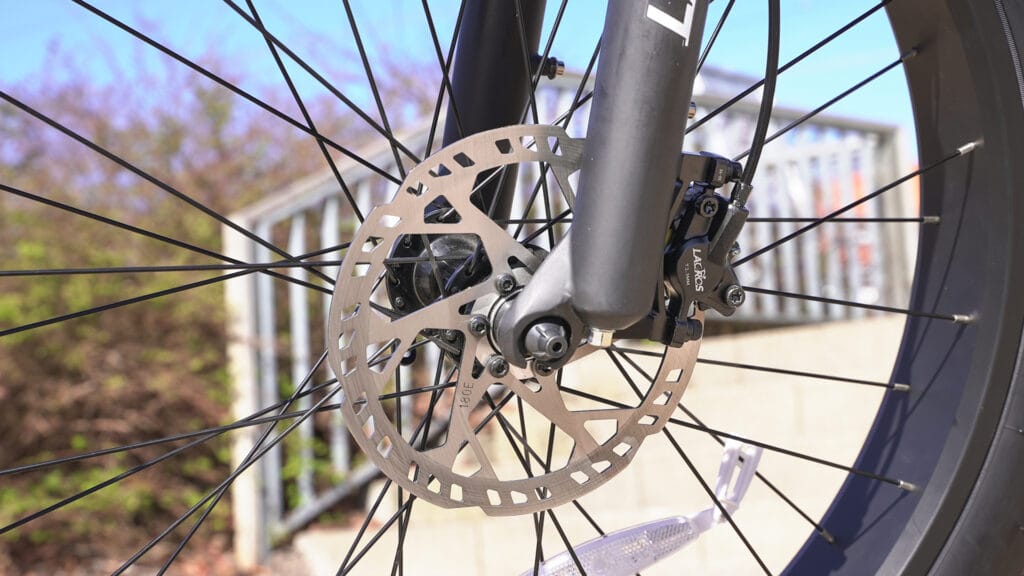
The Thunder runs fully hydraulic 180mm disc brakes front and rear. That’s a step up from the 160mm rotors most competitors ship with at this price, and it matters on a Class 3 bike that hits 28 mph. Bigger rotors give you more headroom for repeated hard stops or long descents.
They needed 30 to 50 miles to bed in, which is normal for fresh hydraulics. Once they did, they became one of the bike’s strongest features.
| Speed | Stopping distance |
|---|---|
| 15 to 0 mph | 13.1 ft |
| 20 to 0 mph | 18.4 ft |
| 25 to 0 mph | 25.7 ft |
| 28 to 0 mph | 30.6 ft |
For an 83 lb bike with a 175 lb rider, those are excellent numbers. The fat tires help here too. The contact patch is huge, and stopping traction is exceptional. Modulation is smooth, no grabbiness or lever wander, and no squeal once bedded in.
Handling and ride feel
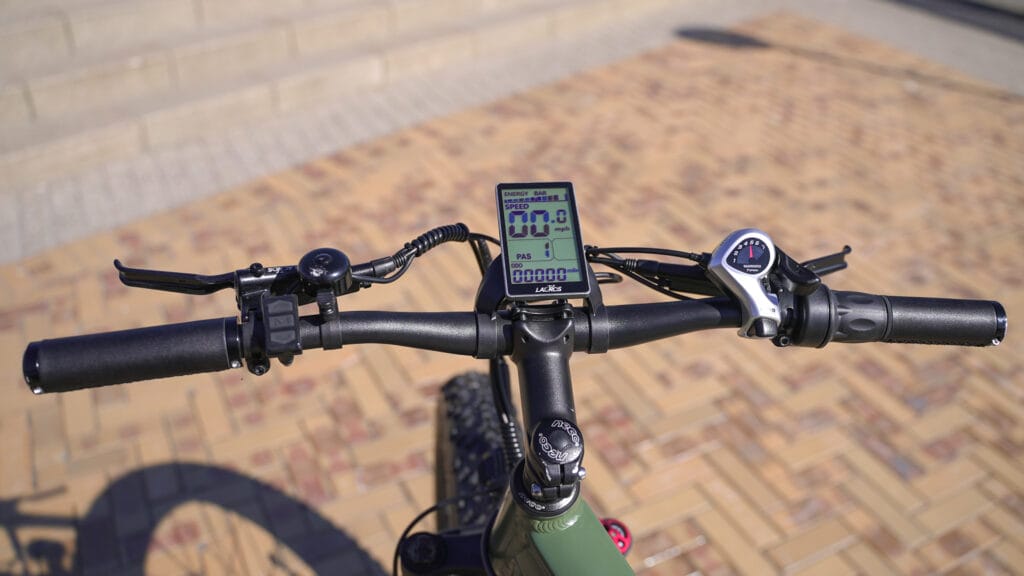
The Thunder is a heavy bike with fat tires and a long wheelbase, so it rides like one. It’s very stable at speed, but not nimble. Don’t expect to thread through tight traffic on it. Riding on forest paths and open roads, it always felt planted.
The handlebars are 26.4” wide. Wide enough for stability, narrow enough to fit through doorways and gates without trouble. Steering is responsive but not twitchy.
Unassisted pedaling is fine for an 83 lb bike. No drag from the hub motor, and the Shimano 7-speed has enough gears to get you home if the battery dies. You won’t enjoy 20 miles like that, but a few unpowered miles is no problem.
Build Quality & Components
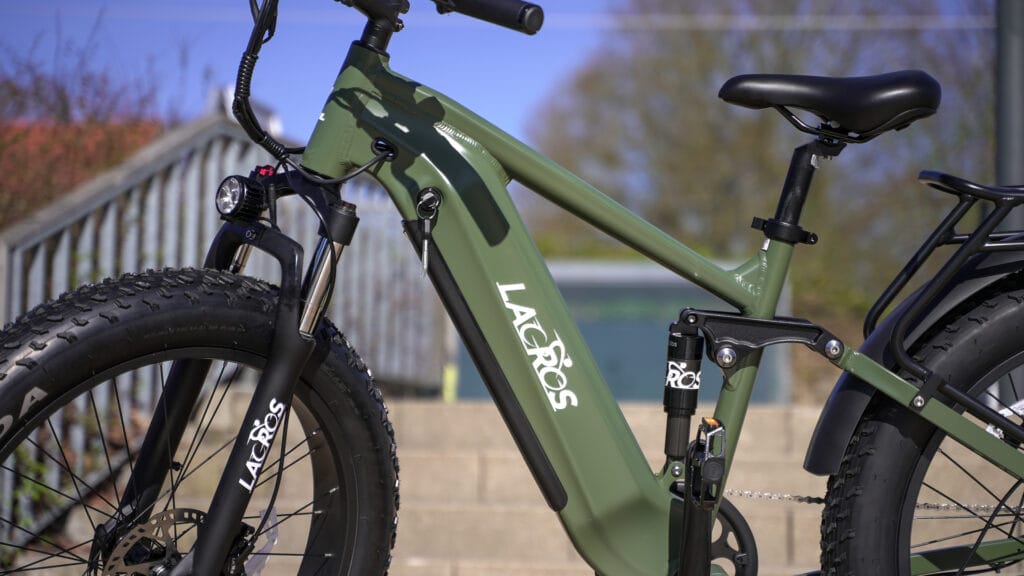
I’ve pushed the Thunder hard over 270 miles in rough conditions, simulating wear and stress-testing the build. Everything holds up well, and the build just feels reliable.
Frame and finish
The 6061 aluminum frame comes in black or olive green. I got the green one and like it more than I expected to. A bit more interesting than the standard ebike black, and it doesn’t look cheap.
The 400 lb payload capacity speaks to the build quality. Combined with the big battery and strong motor, the Thunder is definitely heavy-rider approved. The rear rack can handle up to 25 lbs if you want to load panniers or cargo.
Display
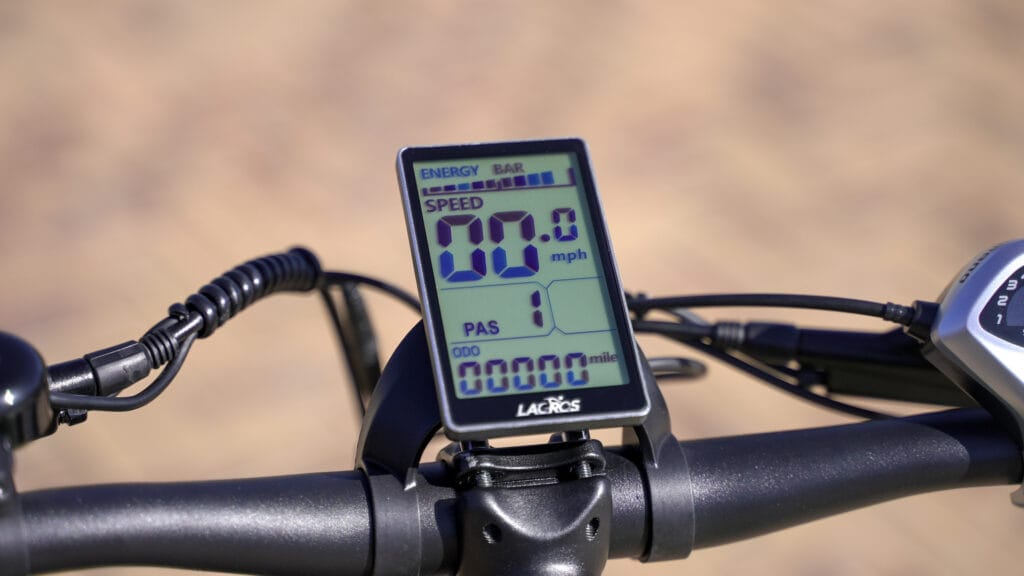
The Thunder uses the same M5 LCD display you’ll find on a lot of ebikes in this price range. It’s not flashy, but it works well. The screen reads well in direct sunlight, and there’s tons of setup info online if you need to dig into the menus. It’s also such a common model that replacements are cheap and easy to source if it ever breaks.
The display shows current and max speed, battery level, PAS level, odometer, trip distance, and ride time. Cycle through, and you can also see real-time wattage. Useful when you’re trying to stretch range or just want to see what the motor is pulling on a steep climb.
Drivetrain
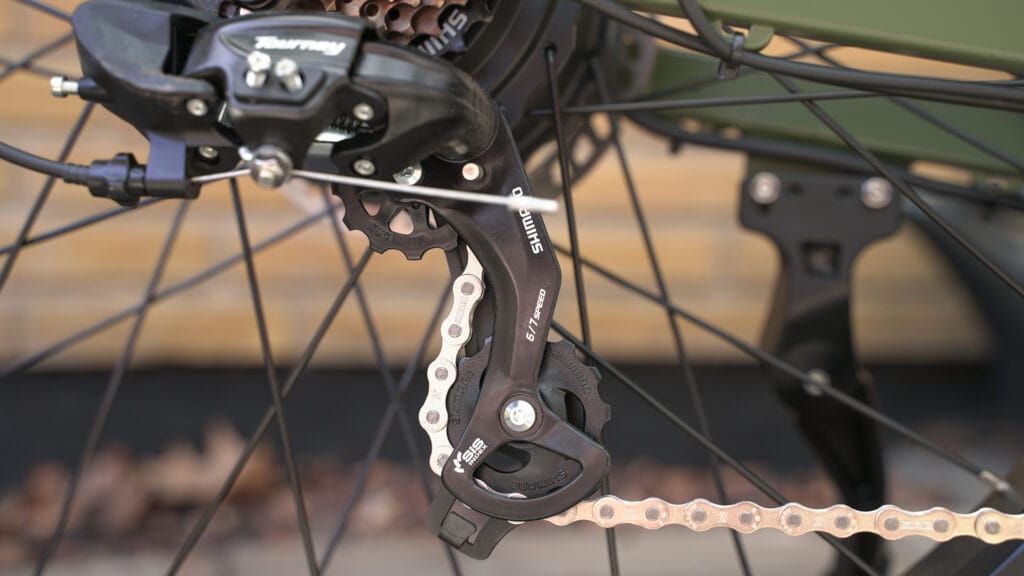
The Thunder runs Shimano Tourney 7-Speed with an SL-TX50 shifter and MF-TZ500 freewheel. Tourney is Shimano’s entry-level model, but that’s totally expected for the price. Not top-of-the-line, but proven. And again, should you ever need to replace parts, they are widely available.
Shifting gears felt clean, also under load. Overall, the drivetrain held its adjustment really well through my tests.
Saddle & ergonomics
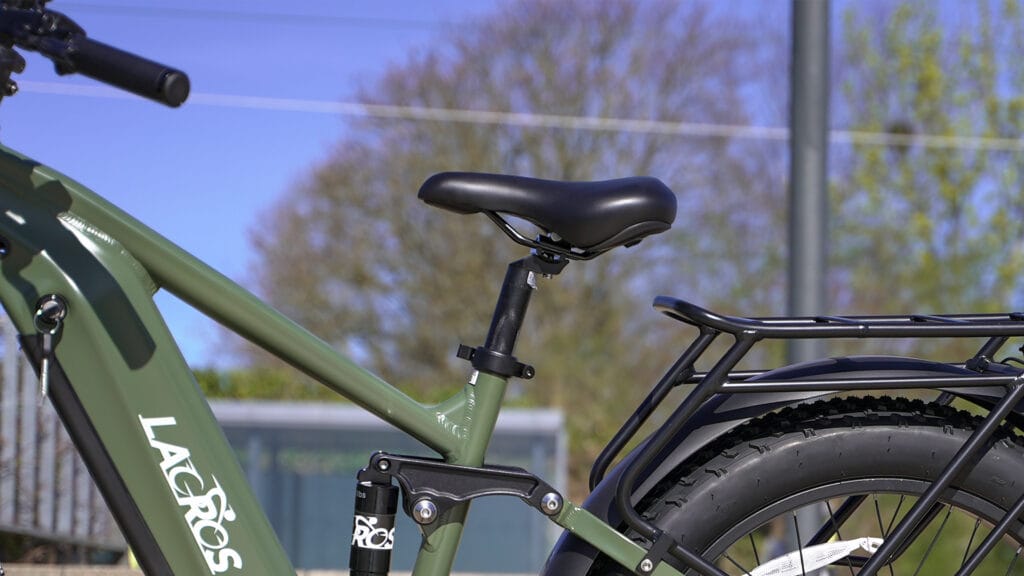
The saddle is soft and comfortable. I’ve done several multi-hour rides without having to shift around or getting sore, which is more than I can say for most stock saddles in this segment. Brands tend to save money here since most riders swap saddles anyway, but this one I’ll actually keep on.
The handlebar reach (16.5″) puts you in an upright, relaxed riding position. Not aggressive like a road bike, and not floppy either. It’s set up for long-ride comfort, which fits how this bike is meant to be used.
Lights
The Thunder has integrated front and rear lights, both running off the main battery. That’s not always a given on cheaper ebikes, where you sometimes get separate lights with their own AA batteries you have to swap out.
The headlight is bright enough to be seen on dark paths, but it won’t replace a proper commuter light if you ride in pitch dark regularly. The rear light gets brighter when you brake.
Weight
At 83 lbs, the Thunder is heavy. Not unusually heavy for a full-suspension fat-tire ebike (the segment averages 70 to 85 lbs), but heavy enough that you should plan for it.
You will not be casually carrying this bike up apartment stairs. You will not be lifting it onto a standard car bike rack without effort. A hitch-mount rack rated for ebikes is the right call if you transport it. The removable battery (which weighs around 8 to 9 lbs on its own) helps a bit when you need to lift the bike, since pulling the pack drops it under 75 lbs.
Fit & Geometry
Lacros rates the Thunder for riders 5’3″ to 6’3″. In practice, that holds up.
I’m 5’11”, and the bike fit me well right out of the box. Plenty of seat post to play with too. It adjusts from 34.6″ all the way up to 42.52″, so I had room to dial it in to my preferred saddle height with margin to spare.
I also had my girlfriend (5’7″) try it with the seat post at the lower end of its range. She found the bike fit her well, but shorter riders will have to put more effort into clearing the 31.5″ standover. If you’re around 5’3″, a step-through frame might be a better call.
For taller riders, the seat post extends to 42.52″, which should accommodate up to 6’3″ without issue. Beyond that, you’d want to look elsewhere.
The 400 lb payload capacity is real, and heavier riders shouldn’t feel limited by the bike’s structural ratings. There’s also plenty of performance headroom to handle steep hills under high loads.
Verdict
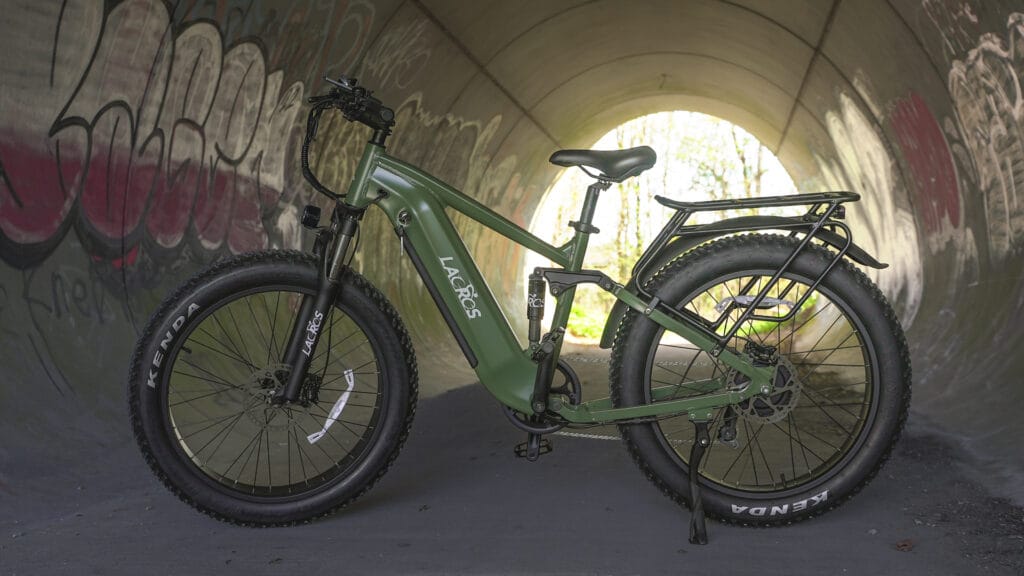
The Lacros Thunder delivers on pretty much everything buyers want in a fat-tire ebike. It’s a comfortable, capable bike with proven components and very few weak points.
The 960Wh battery is among the biggest packs you’ll find at this price, which means serious long-range capability. The hydraulic 180mm brakes give you the extra stopping power a heavy Class 3 bike needs. The full suspension does its job. And the motor is tuned more smoothly than I expected from a cadence sensor.
It’s heavy, and Lacros isn’t a household name yet. But on the road and on the trail, the Thunder speaks for itself. The combination of full suspension, big battery, real hydraulic brakes, and a well-tuned motor makes it competitive with bikes that cost meaningfully more.
Who should buy it
- You want full suspension and fat tires without overspending
- You're a heavier rider (400 lb payload, stiff rear spring)
- You have steep hills on your commute
- You ride a mix of asphalt, gravel, and trails
- You're 5'5" to 6'3" and want a planted, comfortable ride
Who should look elsewhere
- Riders who need to carry their bike up stairs or onto standard racks
- Anyone after torque-sensor smoothness (you’ll need to spend more)
- Shorter riders under 5’5" (the standover may be too tall)
- Pure trail riders who want real mountain bike geometry
- Riders prioritizing portability or city nimbleness
If you’re cross-shopping the Thunder against other options, we ranked it as the best full-suspension fat-tire pick in our Best Electric Bikes guide, where you can see how it stacks up against premium commuters, cargo bikes, and other value picks.
Full specifications
Motor & Drive
| Torque | 80 Nm |
| Motor Position | Rear Hub |
| Sensor Type | Cadence |
| Motor Power | 750 W |
| Peak Power | 1400 W |
| Motor Type | Hub |
| Assist Levels | 5 |
Battery & Range
| Battery | 960 Wh |
| Max Range | 90 mi |
| Charge Time | 8 h |
| Voltage | 48 V |
| Amp Hours | 20 Ah |
| Removable Battery | Yes |
| Battery Position | Unknown |
Component Quality
| Brake Type | Hydraulic Disc |
| Rotor Size (Front) | 180 mm |
| Rotor Size (Rear) | 180 mm |
| Derailleur | Shimano Tourney |
| Shifter | Trigger |
| Drive System | Chain |
| Gears | 7 |
| Cassette | Shimano MF-TZ500 |
| Tire Brand | Kenda |
| Frame Material | Aluminum |
| IP Rating | IPX5 |
Comfort
| Front Suspension | Coil |
| Front Travel | 100 mm |
| Rear Suspension | Coil |
Practicality
| Weight | 83 lbs |
| Weight Limit | 400 lbs |
| Display | LCD |
| Integrated Lights | Yes |
| Throttle | Yes |
| Fenders | Yes |
| Rear Rack | Yes |
| Kickstand | Yes |
| Walk Assist | Yes |
| Special Features | Internal Cable Routing, Regenerative Braking |
Speed & Class
| E-Bike Class | Class 2, Class 3 |
| Top Assist Speed | 28 mph |
| Throttle Top Speed | 28 mph |
Wheels & Tires
| Wheel Size | 26 " |
| Wheel Size (Rear) | 26 " |
| Tire Type | Fat |
| Tire Width | 4 " |
| Puncture Protection | Yes |
Frame & Geometry
| Frame Style | Step-Over |
| Sizes Available | One Size |
| Rack Capacity | 25 lbs |